

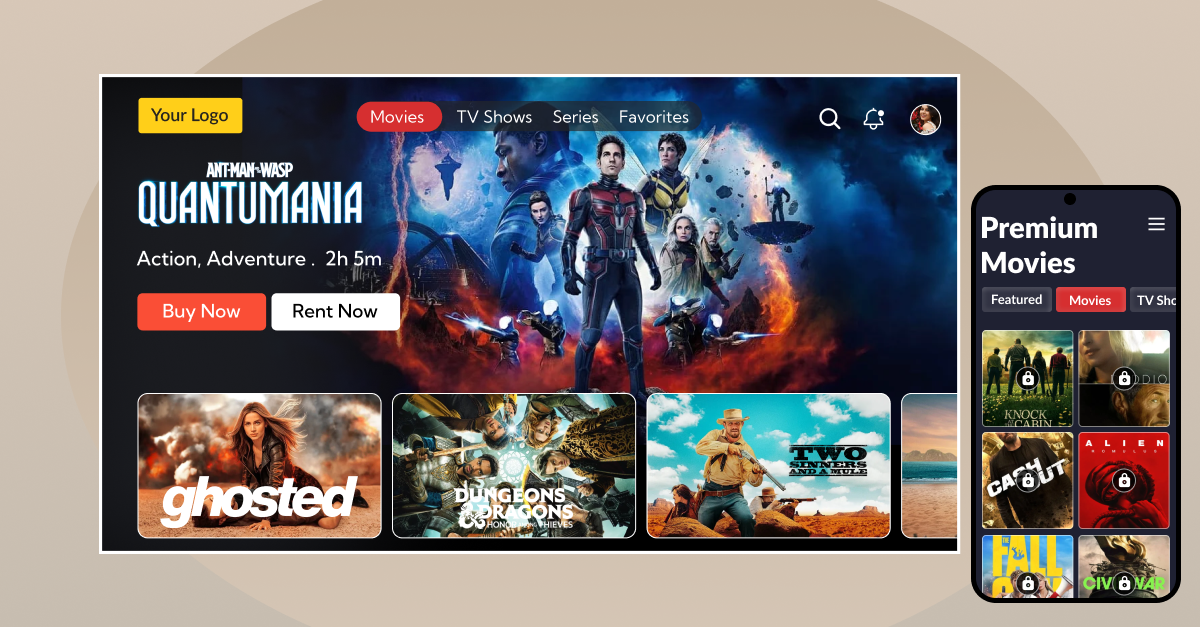


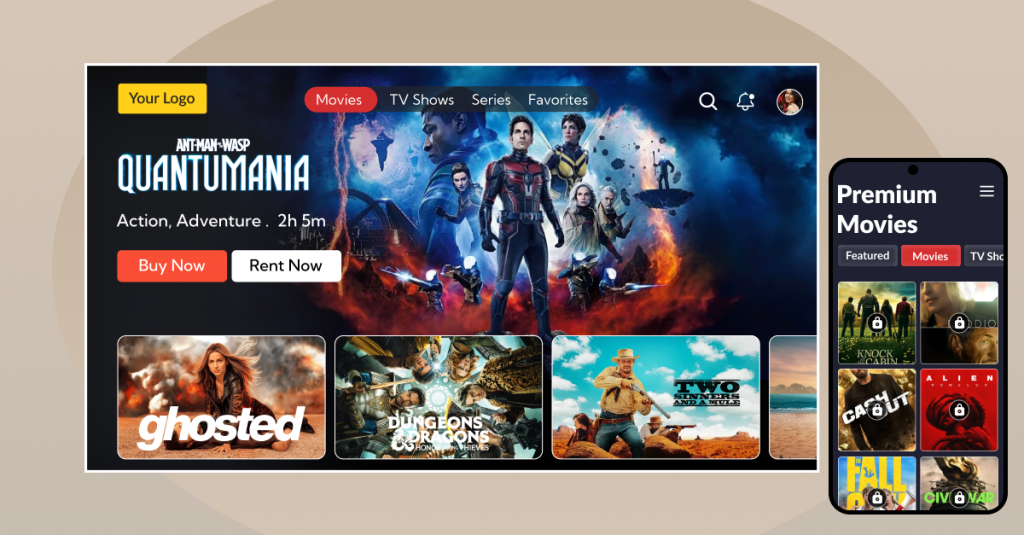
You can create your own movie streaming website and enter a market that’s expected to be worth $2.1 trillion by 2030, with a remarkable CAGR rate of 19.3%. While it’s a sign that the profit potential is certainly there, it also demonstrates that viewers are thirsty for more niche platforms that offer exactly what they want to see.
In this guide, you’ll learn how to create a movie streaming website, from finding the right audience to obtaining content licenses, to adding DRM security and monetization strategies.
We will cover every aspect of running a professional streaming business. Let’s get started.
- Fully Customizable
- Lifetime Ownership
- On-Premise/On-Cloud
- 100% White-label
- Zero Revenue Share
- Hire Developers
What is a Movie Streaming Website?
A movie streaming website is an online service that provides access to movies and TV shows over the internet. Users don’t have to wait for large files to download, and they can view their content of choice within a second. The platform can send video data in real-time and ensure a smooth playback.
The technology is commonly found in popular platforms like Netflix, Amazon Prime, and Disney+, where users can instantly access vast collections of entertainment with a click of a button.
What Makes Netflix a Successful Movie Streaming Website?
Netflix is the ultimate streaming leader among the global streaming companies. There are a few simple but powerful strategies that have made it so popular that it has millions of users hooked every single day:
- Massive Investment in Original Content: They invest billions of dollars every year to make their own original content, as opposed to simply renting shows out of other people’s libraries. This approach provides them with huge blows such as binge-worthy films and documentaries that you can’t even find elsewhere.
- Hyper-Personalized Experience: The app monitors your viewing habits and delivers a truly personalized experience. It even adjusts the artwork thumbnails on your screen to reflect your favorite genres, so it’s easy to find your next favorite show.
- Cross-Platform Access: You’ll have smooth, seamless cross-platform access. Watch a thriller on your mobile phone while on the train and then on your TV in the living room without losing your place.
- Deep Catalog Diversity: They have thousands of titles in their library, from true crime to cooking shows. Having this variety makes sure that there is something for everyone, for every age group, and interest.
- Innovative Monetization Tiers: They provide a simple subscription pricing model for all. They even added cheaper tiers that have ads, so viewers who don’t want to spend much can still join the platform.
- Exclusive International Hits: They acquire exclusive rights to shows worldwide, thus establishing them instantaneously as global trends. One such example of this approach is Squid Game, which went on to become a global sensation.
8 Steps to Create a Movie Streaming Website (Quick Overview)
Let’s look at the 8 steps to build a movie streaming website like Netflix:
- Identify your target audience, nail the niche before anything else.
- Acquire Licenses for the Content, secure legal rights to stream what you own.
- Choose the right platform provider, use the infrastructure built for streaming, not the one repurposed for it.
- Test the Video Content Management System, connect and organize your content library before it scales up.
- Set up the video monetization model, subscriptions, ads, pay-per-view, or a hybrid.
- Implement security measures, like DRM, encryption, geo-blocking, and dynamic watermarking.
- Launch your website, after a thorough testing, before going live.
- Maintain and update the infrastructure regularly.
How To Create A Movie Streaming Website Like Netflix? – A Step-by-Step Guide
So, you have decided to create a movie streaming website over video hosting and other possible components. Here’s a step-by-step guide on how to build a movie streaming website like Netflix in no time:
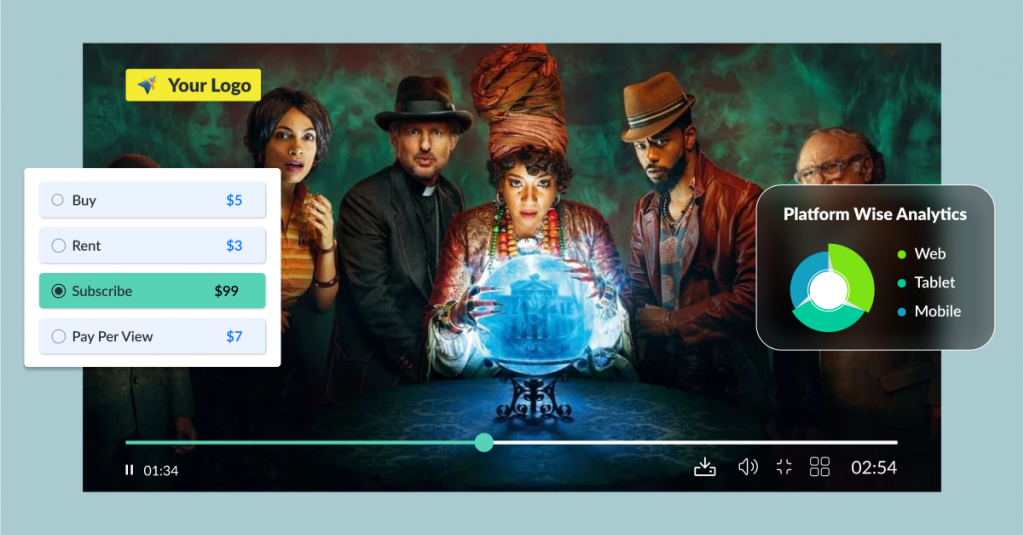
We have researched for long hours and come up with this guide to create a movie streaming platform like Netflix with maximum ROI.
Here are the steps that you need to follow to get started:
1. Identify the target audience
The first thing you need to do to create your own movie streaming website is to decide on the niche content. The content that you accommodate on your platform determines the audience, monetization strategy, and business potential.
Choose the content first, and then tweak your content strategy based on viewing habits. You can license movies from major studios, produce original films and series, or allow unique user-generated content (UGC) for a community-driven streaming platform.
Identify what kind of content or movies most movie lovers watch. Begin with a deep-dive market research, use tools like Letterboxd and Reddit to know what kind of movies or shows are currently getting buzz.
| Content Niche | Primary Audience | Viewing behavior |
| Live Sports and Events | Sports fanatics | Time-sensitive, Live, high engagement |
| Regional films | Diaspora and local communities | Loyalty-driven |
| Educational / Niche workshops | Working professionals (to upgrade skills) and students | Repeat visits (consume on their own pace) |
| UGC / Community content | Gen Zers | Short sessions |
2. Acquire Licenses for the Content
Obtaining valid content licenses is mandatory once you decide on the content. While user-uploaded content may have a non-exclusive license, the movies or shows (especially monetized through subscriptions or pay-per-view) must possess an exclusive license to stream on your platform.
Failing to secure proper licensing can lead to serious consequences, including takedown notices, lawsuits, platform bans, and hefty copyright penalties. Digital piracy costs the global media industry over $75 billion every year, and could reach $125 billion by 2028. (Piracy Statistics, ElectroiQ).
Even when you own proper licensing, movie streaming websites face hurdles like territorial restrictions, piracy, and unauthorized sharing.
For this reason, collaborating with DRM (Digital Rights Management) providers is non-negotiable. And, don’t worry, we’ll explore DRM in detail later in the blog.
3. Choose the right platform provider
A movie streaming website is a specific type of video hosting platform that hosts, streams, and distributes video content (movies, shows, or niche videos) that you legally own.
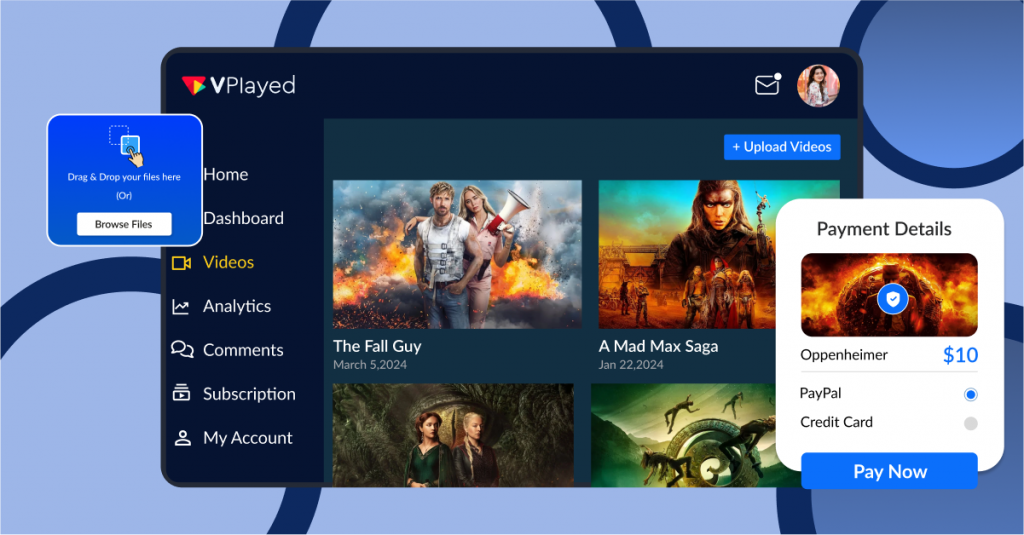
Some platform providers, like VPlayed, enable content owners to create, upload, host, and monetize video content, with utmost platform and revenue control.
These tools help you offer complete movie-streaming experiences with uninterrupted playback, robust security, interactive panels, and more.
| Must-Have | Why It Matters |
| Full Source Code Access | Offers full control over the platform |
| Built-in DRM | Content protection |
| Multi-device support | Reach viewers on any screen |
| Zero revenue share | Keep 100% of what you earn |
| White-labeling | Build under your own brand |
Other movie streaming platforms simply lock your content in for uneven revenue share or platform limitations. This is a drawback for those who wish to maximize their video content. We’ll get into more details about choosing a movie streaming platform (like VPlayed) later on in this post.
4. Test the Video Content Management System
As the content library grows, organizing and managing video content becomes increasingly cumbersome.
Without a proper CMS in place, managing videos can quickly become chaotic: files get misplaced, metadata becomes inconsistent, updating content turns into a manual headache, and even small changes require time-consuming backend work.
Choose a video streaming platform that has an easy-to-use CMS with an efficient approach for content upload, organization, and management.
You will also have to make sure that the CMS supports metadata tagging, content scheduling, and seamless integration with your platform provider.
ProTip
Test the video CMS with your actual content workflow. Upload a batch of videos (using the ‘bulk upload’), tag them, and schedule a release. If the upload takes more than 10 minutes, it’ll slow down your operations at scale.
5. Set Up Monetization Model(s)
Your monetization strategy signifies the engaging part of your video content. It demonstrates how the content strategy works and the technical capabilities of the video streaming platform.
Whether you plan to offer subscriptions like Netflix, pay-per-view streaming access like Amazon Prime rentals, ad-supported streaming, or a hybrid of multiple models, the monetization approach must align with your audience, your niche, and the value of your content.
Read Also: How to Create a Video on Demand Business?
6. Implement Security Measures
When content owners create movie streaming website, unauthorized access is the biggest security threat they face. For instance, in August 2024, a production partner of Netflix suffered a significant security breach, resulting in unauthorized access to confidential content.
This incident highlights the importance of implementing DRM, dynamic watermarking, encryption, token-based authentication, and secure playback, ensuring that only authorized users can access your content.
7. Launch Your Website
Conduct thorough testing before launching your website. This will ensure all features are functioning correctly and the site performs well under load.
Develop a marketing strategy to promote your launch. You should leverage social media, SEO, and partnerships to attract an initial user base.
Create a Netflix-Like OTT Streaming Website
Learn how to build video streaming website with subscription management, video hosting, content recommendations, and multi-device support.
8. Maintain and Update Your Website
Regularly update your content library, implement user feedback, and introduce new features to keep the platform engaging.
Monitor performance analytics to identify areas for improvement and ensure the site remains competitive and user-friendly.
Develop a Professional Video Streaming App
Learn how to create a streaming app equipped with advanced video playback, analytics, and monetization features.


Which Features Matter Most in a Movie Streaming Website?
When you choose the right features, you don’t just build a streaming platform; you build a seamless experience that keeps viewers engaged and operations efficient.
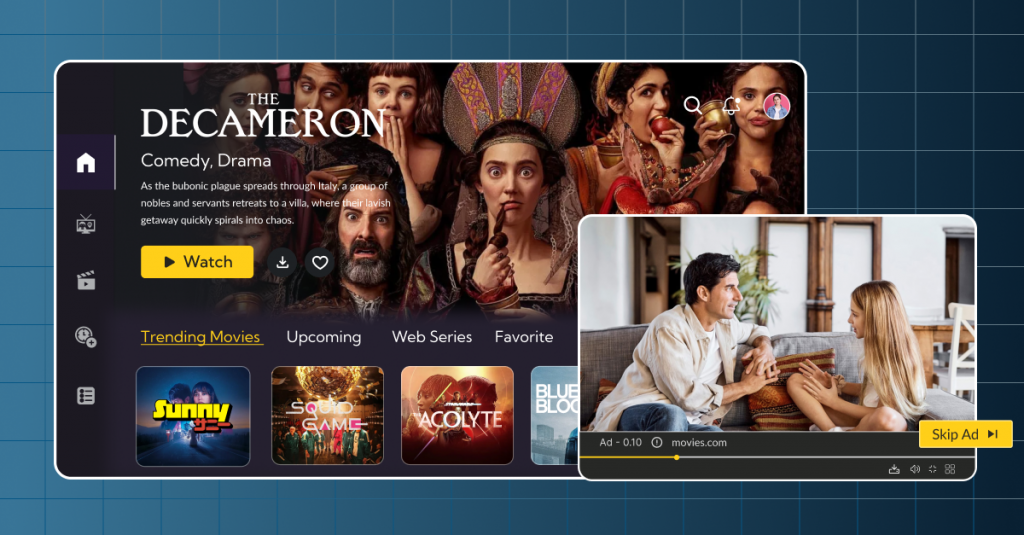
1. 100% Customization
Customization empowers you to build a movie streaming website that feels unique, intuitive, and aligned with your audience’s expectations.
With customization freedom, you can create a video streaming app to reflect brand identity, data formats, and operational preferences.
You can embrace interoperability with other systems or databases within your business operations. Moreover, you can modify the app’s interface to improve usability.
2. Content Management System
VPlayed’s CDN offers an integrated enterprise video management system with dynamic content delivery capabilities.
It means your content can reach the right viewer at the right time. Plus, it also includes effective analytics to manage, store, and stream content efficiently.
With enchanted content management & video tagging, all your content stays organized so you can update video libraries quickly, feature trending content, and even automate video releases to keep your video app engaging & afresh.
3. Platform’s Source Code
Having access to the platform’s full source code gives you complete control over how your movie streaming website works. Without it, the customization options remain limited, and you’re dependent on the vendor’s roadmap for platform updates.
As streaming trends shift and OTT platforms rise, source code access helps you tweak the platform without relying on external tools.
Whether you want to integrate an external system, implement a hybrid monetization model, or scale infrastructure for a growing viewer base, having control at the code level empowers true flexibility.
4. White-labeling
White-labeling allows you to launch a movie streaming website with your own branding. Use your name, logo, and template on your very own streaming app.
By White label streaming services, you can easily eliminate the need for an in-house development team to maintain the platform.
From dynamic dashboards and splash screens to in-app messaging, every touchpoint will ooze your brand values. And, this will lead to increased customer engagement and trust, thereby making your OTT and VOD platform stand out from the rest.
5. Payment Integration
When you create movie streaming website and put video content behind pay-per-view rentals, you would expect paying subscribers, won’t you?
But what if the payment process turns out hectic, sluggish, and time-consuming?
You can offer users multiple payment options with leading payment gateways. Also, you can ensure secure transactions for video subscription plans from any part of the world, as per your preferences.
When the payment process is simple, secure, and swift, you can reduce the last-mile drop-offs and increase the conversion rate.
Consider implementing one-click payments, coupon codes, global currency acceptance, and even region-specific payment options.
6. Real-time Analytics
Know what your audience wants from you and cater to their interests with ease. Use a movie streaming website with an analytical base, specially structured for movies and TV shows. Gather trendy insights from a live dashboard.
Analyze the hidden pattern in audience behavior. And know what content is keeping audiences engaged with fewer mid-drop-offs. Plus, you should optimize recommendations and make data-based decisions to enhance the overall website UX.
7. Multi-device Support
Supporting multiple devices, including Android, iOS, Smart TVs, PCs, Laptops, and Tablets, ensures accessibility and convenience.
If your platform restricts playback to a single device type or lacks consistency across screens, you risk losing engagement, retention, and ultimately revenue.
Your quest to build a movie streaming website comes with watch history, content preferences, and recommendations sync in real-time.
8. Offline Download
While global internet usage continues to rise, disparities remain in high-speed internet access. As of 2024, roughly one-third of the world (2.6 billion people) remain offline, lacking reliable internet access.
For this reason, the offline download and viewing access remains a must-have feature for modern movie streaming platforms.
This feature fosters viewer engagement and retention while allowing users to watch their favorite content, even in low-connectivity zones.
9. Subtitles & Closed Captioning
Subtitles and closed captions strive for inclusivity, including global audiences, multilingual viewers, and viewers with hearing impairments.
Without this feature, you limit reach, engagement, and deny content access to viewers in the industry where inclusivity will take you places.
In fact, federal laws like the Americans with Disabilities Act (ADA) mandate that any online video content must be captioned in order to prevent discrimination.
Simply put, whether or not your target market mandates the need for subtitles and closed captions, it is advisable to include them to nurture inclusivity and engagement.
Learn how much does it cost to start a streaming service that supports live streaming, video-on-demand, and subscription-based revenue models.
What Security Features are Critical for Creating Movie Streaming Website?
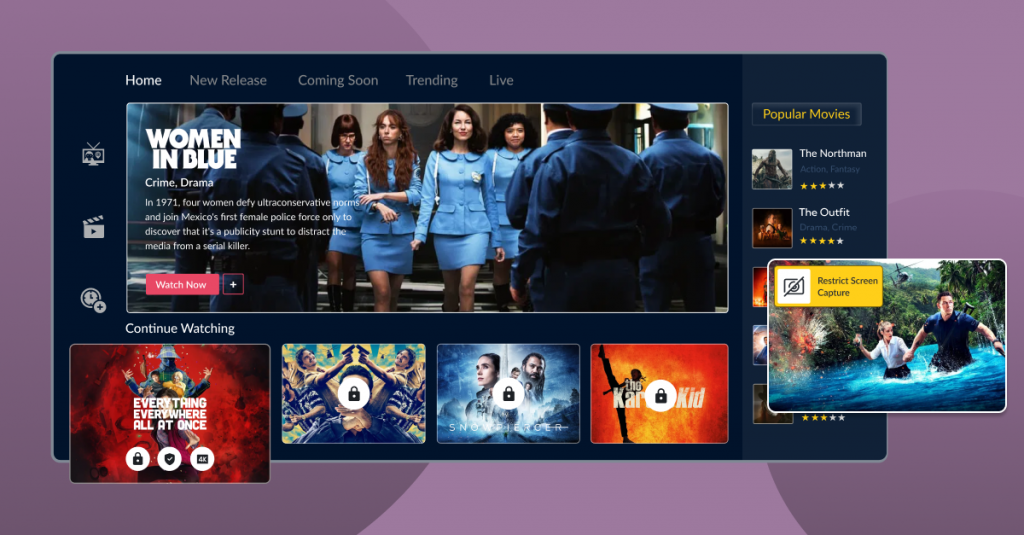
That Netflix partner breach we mentioned earlier? The incident highlights how crucial secure video streaming is nowadays. To mitigate risks, you have to tighten up the streaming platform with DRM solutions, access controls, encryption, and more.
1. Digital Rights Management (DRM)
Safeguard the entire content library with integration to various DRM providers (like Google Widevine, Apple FairPlay, and Microsoft PlayReady) to provide license keys during encryption and viewers’ playback.
Integrating with a proper DRM:
- Restricts content access based on location and the type of device.
- Limits unauthorized logins from different regions.
- Leverages time-bound licenses so the viewing durations can be controlled.
- Added advantage, if forensic video watermarking is done in case of content misuse.
2. Access Control
Access control mechanisms define who can access your movie streaming website. When you create movie streaming website, you can set access controls, provide or block access, including IP-based access and user-level access.
You can implement two-factor authentication for extra layers of security, and you can also block access to suspicious IP addresses from using your platform. Remember:
- It is advisable to allow role-based access for different categories of users.
- If needed, enable geo restrictions to limit users from a particular province/region.
- And a system that detects & stops the same login ID from multiple users/devices.
3. Dynamic Watermarks
Add watermarks to your content to protect intellectual property rights and your brand’s identity. The dynamic watermarking solution from VPlayed is an excellent approach to accomplish this.
And no need to have any worries, as this watermark works well on all resolutions without hampering the video quality. Adding on, you can also embed forensic watermarks for piracy prevention and detection.
4. SSL Certification
The actual purpose of creating a movie streaming website with SSL (Secure Sockets Layer) is to safeguard data transmission between servers and the viewers’ devices.
So, when sensitive video data is in transit, SSL certificates ensure secure cryptographic key exchange by establishing a secure connection between servers and browsers.
Moreover, you can encrypt user login credentials for safe authentication. Also, you can ensure a safe and secure checkout for paid subscriptions inside the platform. Most importantly, owning a valid SSL certificate builds credibility of your streaming service.
5. Screenshot Prevention
Protect video titles from unauthorized distribution with the screenshot-prevention feature that allows you to maximize revenue. You need to research common, external screen-capture extensions and screen recording tools to block users’ access.
You can also set up real-time notification alerts when a screen recording or screenshot occurs inside the system.
6. AES Encryption
Build a secure movie streaming website with AES encryption using 128-bit or 256-bit cryptographic keys to protect copyrighted, licensed content end-to-end.
Some of the benefits of AES encryption are:
- Encrypts video files at the storage and transmission levels.
- Ensures decryption keys are securely delivered to viewers.
- Supports dynamic key rotation for enhanced security.
- Works with adaptive bitrate streaming for seamless viewing.
How To Monetize Your Movie Streaming Application Like Netflix?
Building a successful streaming platform more than great content, it’s about smart video monetization. As the best video monetization platforms is based on a top revenue-generating model where you can flexibly offer your audience a variety of plans.
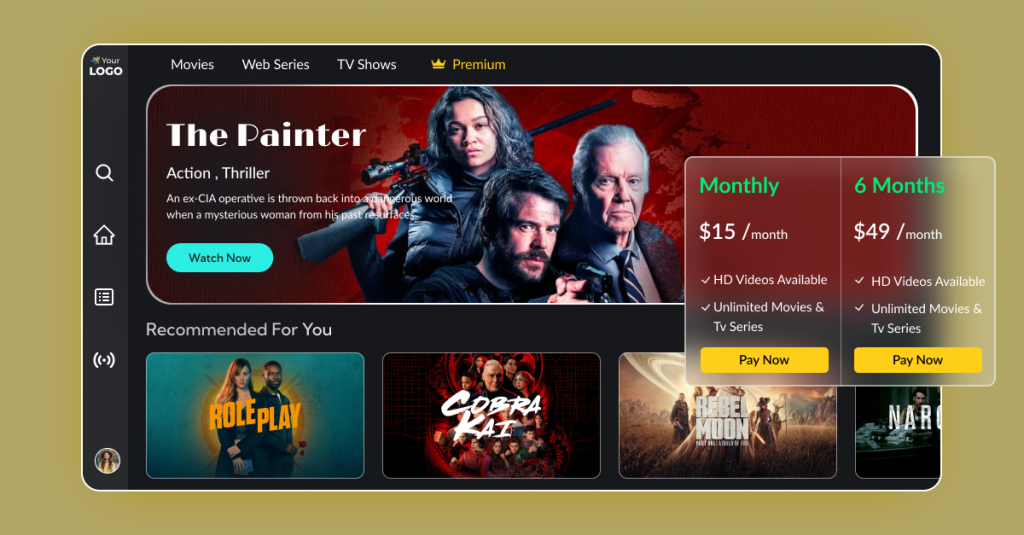
If you’re wondering how to make a streaming website like Netflix, the key lies in choosing the right revenue model. A well-planned strategy, whether:
- subscription-based,
- pay-per-view,
- or premium access,
Ensures steady growth and higher profits. The right approach can turn your platform into a profitable and sustainable business. You can charge a monthly, quarterly, or annual fee, for example.
Also, for the start you can have many heads up with free trial versions for speculated time from your centralized library. Here are the best that we have got you to leverage with:
1. Subscription
The SVOD platform monetization model creates a fantastic opportunity to make money with videos online.
It helps you generate the most predictable recurring revenue with either a yearly, or monthly subscription fee.
Here are some tips to seize your SVOD offerings:
- You can give different content tiers to attract diverse audiences
- Create video bundles for movies, TV shows, and more & upsell
- Integrate with family sharing options to increase retentions
- You can also provide prices slash for long term plans
Because a well defined SVOD plan in your video streaming website can leverage brand loyalty and bring in consistent revenue so you can focus more on new content.
2. Advertisement
What is AVOD? Advertising-based video on demand integrated with various ad platforms to generate revenue in a quick and easy way.
Play interactive video ads with ad customization models that turn higher conversion rates.
Below are some examples & tips of AVOD:
- Don’t ruin the user experience by placing ads without optimizations
- Leverage AI driven targeted ads for more conversions
- Offer both skippable & non skippable ads via viewer behaviors
- You can also collaborate with brands for interactive ads
- Gift users with ad-free hours after watching X number of ads
Make sure to find the right balance of content and ads when you choose AVOD, as if the code is cracked – you can bring in both engagement and revenue.
3. Pay-Per-View
Sell every content within the platform by setting it available as pay-per-view to any of your target audiences to generate quick revenue.
This model is especially effective when you want to monetize educational videos, allowing learners to pay for specific lessons, masterclasses, or skill-based workshops without committing to an entire subscription.
The best pay to utilize PPV is for one time initiatives like:
- Exclusive events
- Live music concerts
- New movie releases
- Online webinars
- Educational workshops, etc.
In this case, you can provide discounts for multiple purchases. But you can also go a step ahead and bring in the “rent vs. buy” option for more flexibility.
Brownie Tip: Establish limited time availability to bring in the FOMO factor so that it persuades quick purchases and revenue per viewer via PPV.
4. Premium Video On Demand Model
Premium video on demand model is generally used to classify video content that has newly arrived which is otherwise known as “Blockbuster type”.
This can essentially assist you in an urgent scenario where you could make up for the revenue lost and set it in a competitive streaming space at par with movie studios, film distribution box office, etc.
Here are some additional tips for Premium Video On Demand:
- You can charge higher prices for early access of blockbuster movies or TV shows
- Blend premium extra offerings like directors cut, BTS footage, interviews, etc.
- The pricing can be tiered model based on the rental duration limit
- Go a step ahead and directly collaborate with studios for exclusive pre-releases
PVOD is a trend that is catching up, and the market potential is huge too. Devise a proper plan and pair it along with a strong marketing strategy to see success follow.
5. Catch-Up TV
Providing viewers with an opportunity to watch the broadcasted or missed TV programs through the website or app as on demand with a monetization model of subscription.
And here’s how you can capitalize on Catch-Up TV to bring you more revenue:
- Monetize missed episodes with limited time free access for quick viewing
- And then move them to paid subscription tier for viewing access
Plus, you can keep the content available for a certain period of time via blending AVOD into this, so both the subscriptions and ad revenue keep flowing in.
6. Hybrid Model
Hybrid monetization one among the other approaches can give you the blend of collective models in order to maximize revenue.
For example, you can think of clubbing subscriptions with advertising-based content offered which can give you pretty good profitability.
Think of it as “median modus operandi” helping you to get a solution to improve the streams of ROI.
Build a Business Around Selling Videos Online
Ready to put these monetization strategies into action? Check out sell videos online successfully.
How Much Does It Cost To Build A Movie Streaming Website Like Netflix, Hulu?
Building a movie streaming website in 2026 can cost anywhere between $20,000 for a simple MVP or up to $200,000 for a fully featured platform. For full-featured streaming websites, the cost can easily surpass $200,000 or more, depending on the number of devices (iOS, Android, Smart TV), high-speed CDNs, and whether you want multiple DRMs to protect your content.
Also, the difference between building from scratch and choosing a purpose-built platform influences the final cost. Here’s how two approaches compare across every cost factor that matters:
| Cost Factor | Build from Scratch | Purpose-built Platform |
| Time to Market | 6 – 18 months | 2 – 4 weeks |
| CDN & Infrastructure | Self-managed; unpredictable costs | Pre-integrated; predictable costs |
| Video Transcoding | Separate cost | Built into the platform; no additional cost |
| DRM | Licensed separately | Integrated with the platform |
| Monetization Setup | Built per model (SVOD, TVOD, AVOD) | Multiple models set up within the system |
| Scalability Cost | Needs re-engineering as traffic grows | Built to scale |
| Analytics | Third-party tools integration | Built-in analytics dashboard |
Once you can understand the key factors influencing the final cost, you can estimate the final cost with accuracy. Moreover, it’ll also help you stay within your initial budget. This approach helps you plan things, scale within your budget, and monetize content without disruptions.
Why You should Choose VPlayed for building your movie streaming website?
Choosing the right solution provider to create movie streaming website is a crucial first step. The streaming website isn’t just a video hosting platform, where you’ll upload videos and let the infrastructure exhibit them.
The solution provider must manage content, ensure security, support multiple devices, and scale without any technical limitations.
When you don’t have such a solution provider, technical problems compound, monetization becomes complex, and security lapses expose content to piracy.
That’s where VPlayed’s expertise in video streaming comes in. With 100% customizability, full ownership over source code, enterprise-grade security, and more than 10+ monetization models, VPlayed empowers you to build a movie streaming website that effectively scales up, rigidly safeguards content, and reflects your brand.
Conclusion
Each day spent on managing infrastructure is the time not spent acquiring content or growing a community audience. The time the build-it-yourself approach consumes from your business is enormous. You may need to streamline multiple third-party tools to manage the streaming infrastructure.
Whereas purpose-built movie streaming platforms exist to eliminate this trade-off entirely. When the security aspect is handled, CDN is properly configured, and the monetization is properly set up, the only thing left is the work that actually grows your business.
The content you own, let it be licensed content from production companies or user-generated content (UGC), deserves a streaming infrastructure built to realize its potential. That’s exactly what this blog/guide was all about.
Frequently Asked Questions (FAQ):
1. Why Do You Need A Movie Streaming Website?
This is quickly becoming one of the most common methods of viewing video content. When you consider creating a movie streaming website, you have the potential to revolutionise the way the world perceives films and television. Deliver a fantastic user experience while earning a steady income from subscription packages with fixed prices.
2. How To Start A Movie Streaming Business Like Netflix?
There are numerous arguments in favour of launching a video streaming business. The answer to the question of how to start a streaming website like Netflix is mostly determined by market demand. It goes without saying that if there is no market demand for your products, it might remain unsuccessful. Likewise, we know that people prefer watching breakless content & when it comes to films, it convinces you to start delivering the best moviestreaming experience.
3. What Are The Features Required To Build Your Own Movie Streaming Platform?
There are some essential features that you need to consider while creating a movie streaming website such as managing content distribution at geo location, result-oriented marketing suite, monitored audience behavioural insights, amplified revenue opportunities, potential ability to self host the platform, multiple device compatibility, whitellabelling options and many more.
4. How Much Does It Cost To Start A Movie Streaming Service?
Building the most budget-friendly movie streaming website equivalent to Netflix entirely depends on the features, customization and other services that you need to create all the difference in the streaming world. All of this can be bought with a lifetime ownership that makes it worthy of the capital put in.
5. How To Monetize Your Movie Streaming App?
Broadcasters can profit from their video content in a variety of ways while researching on how to create a movie streaming app. Inserting adverts, incorporating sponsored content, giving subscriptions, and creating seasonal movie coupons are among the most prevalent. These unique video streaming business strategies are used to generate revenue from your videos.
6. How To Start A Movie Streaming Website Like Netflix?
To start a movie streaming website like Netflix, begin by identifying your target audience. Choose a suitable platform for hosting and register a domain name. Design an engaging website, incorporating a robust CMS. Acquire necessary licenses, integrate secure payment gateways, and implement essential security features. Finally, launch your website and ensure its ongoing success through regular maintenance and updates.
7. How Does Netflix Make Money?
Netflix makes money primarily through subscriptions, important partnerships, and advertising. Approximately 90% of its total revenue is derived from subscriptions and strategic partnerships. By offering diverse subscription plans and consistently expanding its content library, Netflix attracts a large subscriber base, establishing itself as a key player in the streaming industry.
8. What are the Essential Features of a Movie Streaming Website?
A movie streaming platform necessitates a user-friendly design, an extensive and well-structured content repository, effective search functionalities, top-notch streaming quality, strong security protocols, adaptable subscription models, social interaction capabilities, and the option for offline and live streaming. Also, it should offer diverse content availability, incorporate advertising features, and integrate a robust CMS for content organization and delivery.
- Request Demo Book a Live, Personalized Demo
- Contact Sales Reach Out to Our OTT Experts


