

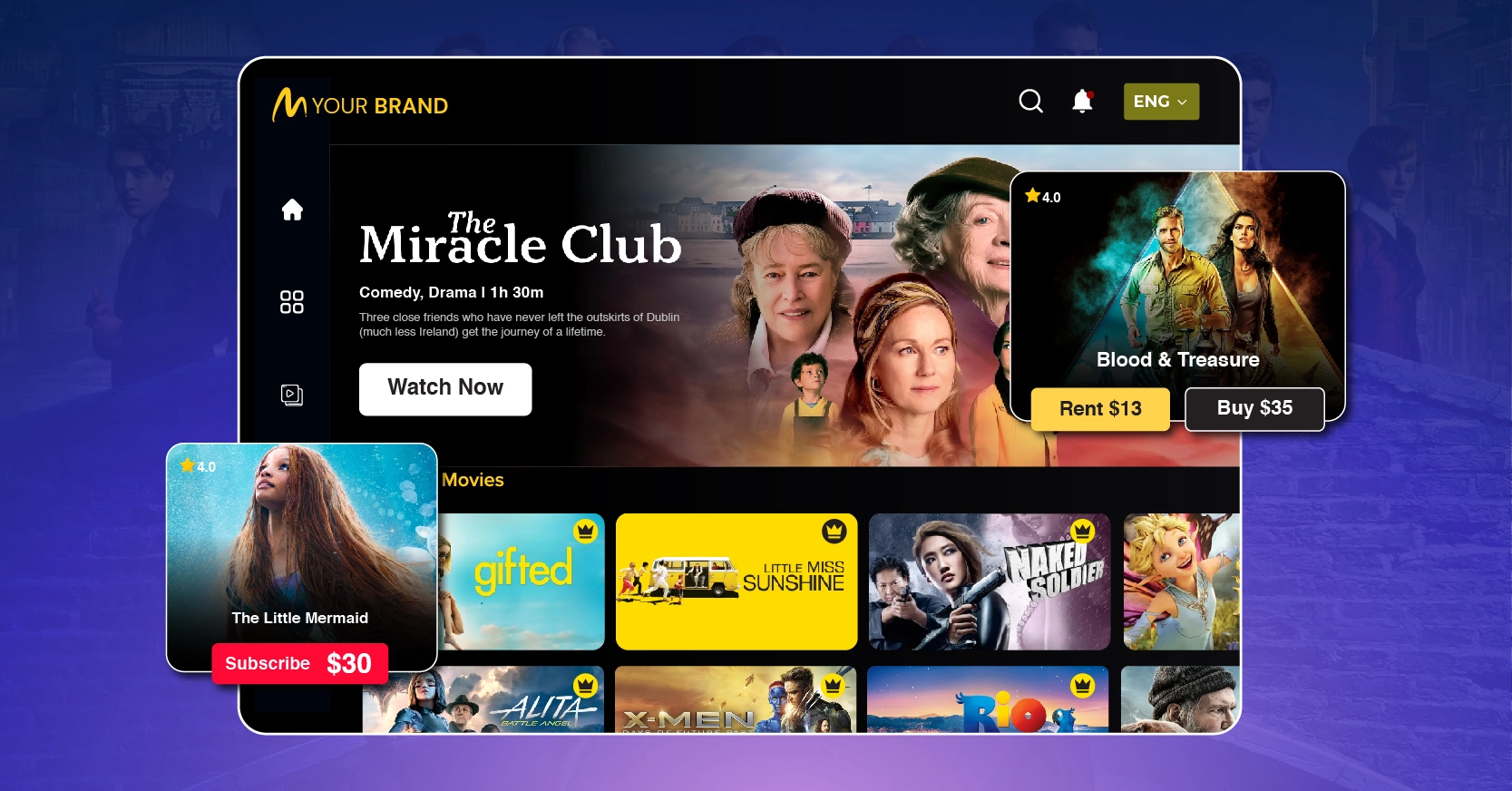


Video on demand is one of the most popular content distribution systems on the Internet. Users access the on-demand video libraries, pick their favorite video content, and stream whenever they want.
It is so convenient that enterprises, corporations, and even media houses have adopted the system, with the market share projected to reach $270 billion by 2028.
These businesses use video on demand libraries to exhibit their products, create internal training videos, or produce engaging video pitch decks.
To start a video on demand business, you need to decide whether you’re ready to go from a business that delivers products to something that provides a result-driven service.
You should continually be working to improve your video library and evolve your video production workflows. Without the two, the video on demand business will end up being an expensive hobby rather than a healthy full-time business.
In this blog, we’ll approach video on demand from a business point of view (POV), with actionable steps to set up a viable VOD business in 2026.
- Fully Customizable
- Lifetime Ownership
- On-Premise/On-Cloud
- 100% White-label
- Zero Revenue Share
- Hire Developers
How To Start an Online Video On Demand Business?
Across industries, from education to media, and entertainment to sports, the video on demand offers unparalleled convenience and facilitates seamless communication between businesses and customers.
The next step is understanding how to turn VOD distribution system into a business model of your own, including the following steps:
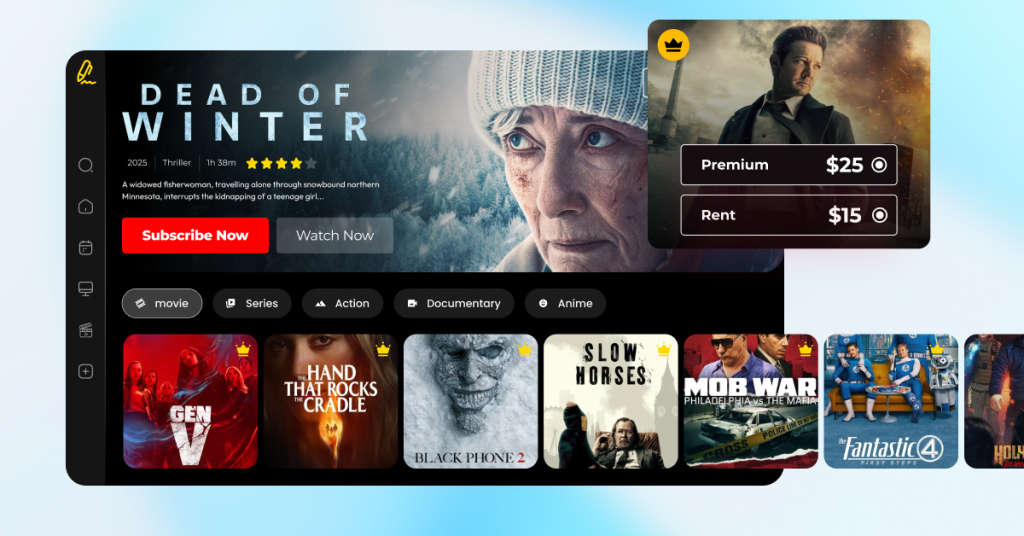
Here are some simple steps to create a stunning video on demand website:
Step 1: Know Your Audience
The first step in identifying your target audience is creating the user personas. There are umpteen templates available online to create, edit, and exhibit user personas; however, you’ll need to jot down user characteristics, with the help of:
- Social media analytics
- Social listening
- Market research
Feel free to leverage user personas that you may already have in your business, or create new ones with the above-mentioned methods.
Nothing is ineffective as long as it contributes to your video on demand business. It’s wise to take your time during this stage and be as clear as possible about who your audience is.
Step 2: Plan Your Business Model
Once you identify the audience, the focus should be to plan and strategize your business model.
If you want to leverage video on demand, the chances are that you would want videos to be part of your existing business, or your business model should entirely be about videos.
Enterprises, corporations, and media companies own large-scale video libraries, for which they would want to leverage VOD technology. However, independent content creators would want to leverage their expertise to start a video on demand business, monetize it, and offer viewers immediate access.
When you carefully plan the business model, your video on demand initiative moves from an experimental idea to a viable business framework.
Step 3: Prepare Your Content
The content you create or already own is the cornerstone of your video on demand business.
Before creating or uploading videos, businesses should define the purpose of each content piece and how it contributes to audience retention, upsell opportunities, or long-term library value.
From a business perspective, content preparation includes structuring videos into series, categories, or programs that encourage repeat viewing and long-term subscriptions.
Equally important is managing the content lifecycle, with the help of a video content management software, knowing when to refresh existing videos, when to take down outdated content, and repurpose high-performing assets into new content formats (like vertical videos).
Step 4: Build Your Website
Scale up your video business operations with a feature-rich video on demand website. When you know how to create a video on demand website, your business can shape impressions and influence conversions.
Ensure that your website is equipped with essential features for content management, content editing, monetization models, security protocols, and more.
Equally important is brand consistency and trust. Choose a solution provider that gives complete branding freedom, allowing your brand to take the center stage. When aligned with the best video monetization platforms, your video on demand website becomes the storefront of your video operations.
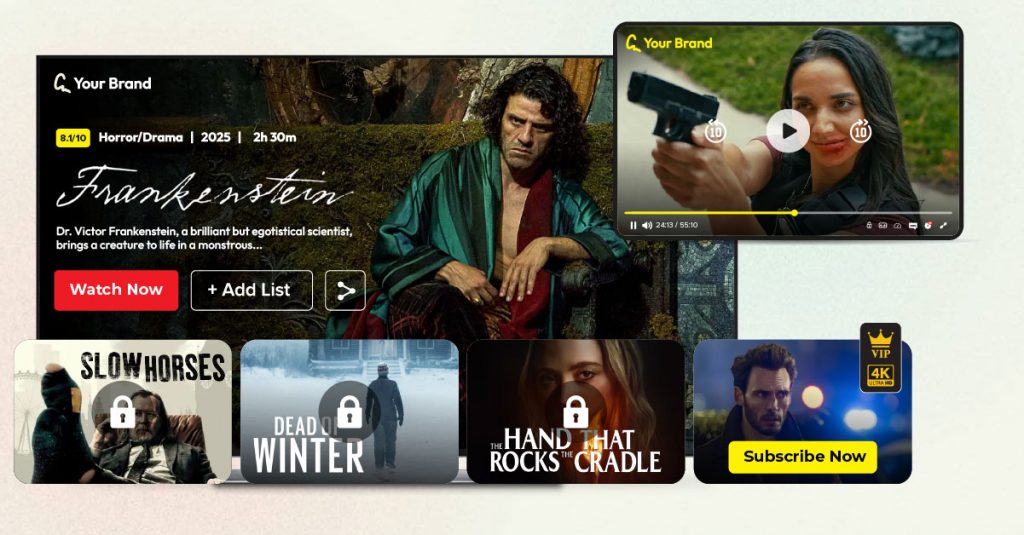
Create a Subscription-Based Streaming Website Like Netflix
Explore how to create a video streaming website like Netflix powered by subscription monetization, personalized viewing experiences, and secure content delivery.
Step 5: Choose Your Monetization Model
Once you’ve built the website, choosing the right monetization model becomes the obvious next step. Selecting the right model depends on many factors, but the content that you create or already own has the bigger say.
Subscription models work best for regularly updated libraries such as fitness videos, courses, or episodic content. Transactional model works best for exclusive, premium content, such as live events, workshops, or early access releases. Ad-supported models typically suit high-volume, broad-interest content.
Certain video on demand businesses sell videos online via a hybrid approach, combining multiple models to diversify revenue and reduce risk.
Step 6: Secure Your Video Content with DRM
When video content is your primary revenue-generating means, protecting the video library should be your top priority. This is why content protection, particularly through Digital Rights Management (DRM), is essential to maximizing the value of a VOD business.
DRM safeguards monetization by ensuring that only paying users can access premium content, across devices and locations. With rising piracy and security vulnerabilities, strong DRM becomes a prerequisite for video on demand websites for sustainable growth.
Step 7: Set Up Video Analytics
When you explore how to start a video on demand business, data-driven decisions should take the center stage, but not assumptions. Video analytics help you monitor how audiences discover, consume, and engage with the content. These insights allow businesses to refine pricing models, prioritize high-performing content, and improve customer lifetime value.
Repurposing content also takes its inspiration from real-time analytics, as key metrics suggest the potential formats for the existing content. When used with the right metrics, video analytics transform a video repository into a performance-driven business model.
Step 8: Promote Your VOD Business.
Even with strong content and infrastructure, a VOD business cannot scale without a clear go-to-market strategy that consistently attracts and retains the right audience.
Promotion of your VOD app includes building awareness through owned channels, partnerships, and content previews, while guiding potential customers toward conversion through clear value propositions and targeted messaging.
Explore the step-by-step process to start a streaming service that delivers seamless viewing experiences and sustainable revenue growth.
How VPlayed Helps Business to Build Successful VOD Website?
- VPlayed is an end-to-end video-on-demand website builder and white label streaming platform that lets you digitize the video experience for global audiences.
- Design a business model by finding the ideal niche on which you can create quality content.
- The next step is to find a business service like VPlayed and pay at a one-time cost which you will ultimately own.
- Customize the added features in your kitty to suit your business based on what customers expect.
- Also, customize the layout to resonate with your brand image.
- Ensure that the videos are compatible to stream on multiple and remote devices.
- Find out the best video monetization platform that you can work with.
- Pay attention to the video content management system and the security of the system with the necessary tools.
- Add features such as analytics to monitor your videos’ engagement rate and other progress to analyze them regularly and make necessary changes then and there.
- Set up the on-cloud hosting and build an available VOD app after ensuring the security features.
Find the Right Video Streaming App Builder
Compare the top video streaming app builders that support content management, monetization, and seamless video delivery.


What is the Cost of Starting an Online VOD Business?
Starting a video on demand business can cost anywhere from $30,000 for a basic website to $50,000+ for a high-end VOD website, with extended support for content management, built-in monetization, three-layer security architecture, hosting/CDN, and access to source code.
These estimates can fluctuate depending on your specific needs and the customizations you want. But you cannot compromise on the basic working architecture because of the cost, can you?
If you want the best HTML5 video player for your VOD website, you can splash a bit extra for the buffer-free, cross-browser streaming experience it offers.
Create Your Own Video Streaming App
Learn how to develop a video streaming app builders designed to deliver engaging viewing experiences across devices.
Industries That Benefit Most from Video on Demand Technology
Having a VOD library is a great way for businesses to handle video operations, grow their brand, and keep their customers engaged.
It’s a classic ‘show, don’t tell’ technique that businesses can unleash to build a loyal community and generate consistent revenue.
However, not all businesses fit the bill for video on demand technology. Certain industries thrive on live content, while some thrive on pre-recorded content, including:
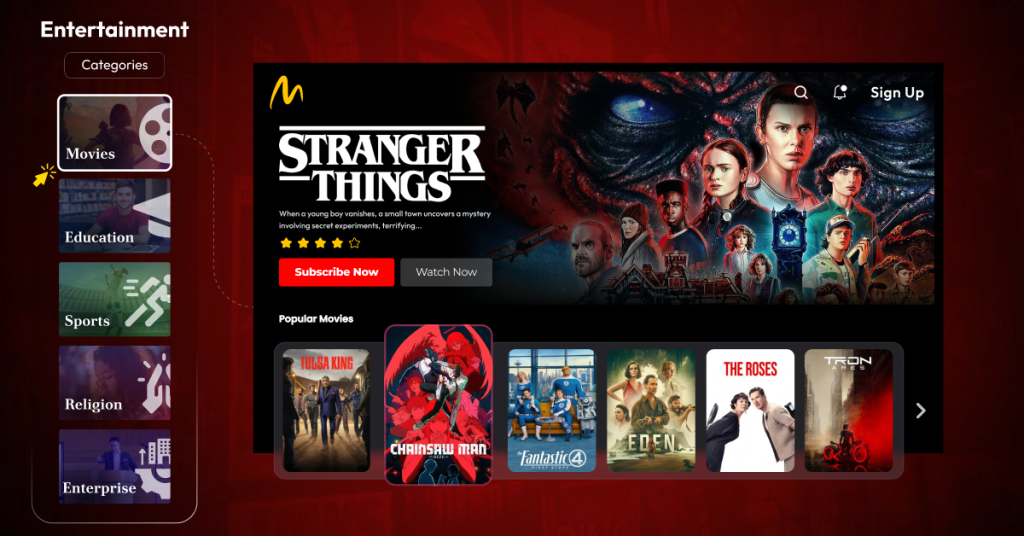
Video-On-Demand: Use Cases
Here are the top 5 industries leveraging video-on-demand technology in their business.
1. Media & Entertainment
The media and entertainment industry was one of the earliest adopters of video on demand, with content owners preferring to make a movie streaming website as VOD aligns naturally with content monetization at scale.
Instead of relying solely on broadcasters or theatrical releases, studios, production houses, and independent creators use VOD platforms to distribute content directly to audiences.
From a business standpoint, the video on demand enables media and entertainment businesses to diversify revenue through subscriptions, rentals, ad-supported viewing, and more.
Most importantly, they also extend the lifespan of content libraries beyond traditional expectations.
2. Sports & Fitness
Sports and fitness industries are examples of how to start an on-demand video business, turning expertise into consistent revenue.
Fitness instructors, brands, sports academies, and wellness professionals start a video on demand business to monetize workout videos, wellness sessions, and one-on-one coaching sessions, expanding beyond in-person limitations.
Fitness industry benefits largely due to on-demand convenience, allowing customers to train or work out at their own pace and to revisit content (whenever needed).
When aligned with clear content strategy and pricing, VOD transforms fitness and sports content libraries into a sustainable, content-led business.
3. Education
Educational institutions and independent online educators use video on demand to scale knowledge delivery.
They use on-demand learning libraries to package courses, certifications, and skill-based training programs. This allows online educators to monetize their educational videos without being limited by classroom size or fixed schedules.
Subscriptions, access to the best online video platforms, course-based pricing, and bundled learning materials help create predictable revenue streams.
VOD convenience makes it easy to refine offerings, expand video libraries & course catalogs, and serve global learners at scale.
4. Enterprises
Enterprises use video on demand to streamline internal communication, standardize training, and protect institutional knowledge at scale.
Large organizations build video on demand websites for employee onboarding, compliance training, leadership development, and product knowledge sharing, areas where consistency and repeatability impact business performance.
Businesses maintain control over access, updates, and viewer insights while centralizing content in a VOD platform.
Over time, these video libraries evolve into strategic knowledge assets that support workforce scalability, operational continuity, and long-term organizational growth.
5. Religious
Churches, ministries, and faith-based institutions use video on demand to extend their reach beyond physical locations while maintaining consistency in message delivery.
On-demand access supports flexible participation, encourages repeat viewing, and allows content to reach geographically dispersed communities.
From an operational and sustainability standpoint, the VOD platforms help religious organizations scale engagement without increasing logistical costs.
Conclusion
Striving to build a video on demand business in 2026 is not just about streaming technology, but more about your business solving problems.
If your VOD business could help someone access pre-recorded sermons in a low-network area, you’ve just solved a pressing problem.
Long-term success definitely depends on how consistently you’re doing it, meaning your viewers or customers know exactly what they are getting from your business.
That’s why we’ve covered all the details that you should know about launching a video on demand business.
- Request Demo Book a Live, Personalized Demo
- Contact Sales Reach Out to Our OTT Experts
Frequently Asked Questions (FAQ):
1. How To Create A Video On Demand Website For Business?
You can now build customized streaming business specially for various genres in video on demand by firstly planning content with the target audience. Then content production & uploading on the website comes into the category. When it’s all set to stream you need to embed your video player & finally promote your VOD business.
2. Why VOD Business Important In 2054?
With 2021 year nearing to a closure many business owners are flipping through the page to start video on demand service, looking forward to new avenues. On-demand video business models help to convert their vision into incredible success via its popularity, high engagement, versatile ways to target, & ability to share & monetize.
3. Which Monetization Model Is The Best For VOD Business?
Streaming with an effective business revenue model largely depends on genre of content that’s added to a video on demand site created on your own. SVOD platform is the most common type chosen by media owners to reap constant profits. Other than that, selecting a perfect monetization strategy depends on audience’s choices to cater. Some may like to watch a complete pack where TVOD can help, apart from AVOD.
4. How To Secure Your Video On Demand Content?
When you have decided to start an online video streaming business, secure video delivery comes into major play and we all know that security is the lifeblood of professional broadcasting. Some of the key protocols like AES Encryption, HTTPS Delivery, SSL Paywall, Password Protection, etc. will ensure to monitor your content originality.
5. What Is The Most Popular Video On Demand Service?
While looking into establishing yourself as one among the big brands in the industry, typically Netflix can help you to gain best insights as it shares the standard-bearer. Subsequently, Vimeo occupies the place offering vivid video projects through on demand section. Then, definitely Twitch & YouTube TV are your best bets to enjoy people’s games. Not to forget, Amazon Prime & Hulu share an amazing library for standalone video subscriptions.


