





- Find out when to hire DevOps engineers and determine the right time to bring them into your business.
- Discover the must-have skills and key responsibilities to hire expert DevOps engineers.
- Know the step-by-step hiring process to find the top DevOps engineer faster.
- Compare the costs of hiring junior, mid-level and senior DevOps engineers for your project.
- Explore how hiring the best DevOps talents can boost software delivery, reduce system failures, cut operational costs and more in this DevOps engineer hiring guide.
Is your software rollout slowing down because of deployment delays, architecture issues or communication gaps between development and IT operations? The right DevOps engineer can solve these challenges while helping your business speed up software delivery and scale with confidence.
As modern DevOps practices continue to evolve and become more complex, hiring the right talent is no longer just a technical decision; it’s a strategic advantage that keeps your business ahead of the competition. However, with countless skills, tools and experience levels to evaluate, finding the ideal DevOps candidate can be a challenging process.
With DevOps engineers becoming a critical addition to IT teams and 29% of organizations having hired one recently, bringing the right talent on board has become more important than ever. To make this process easier, this guide highlights a proven process to hire DevOps developers that explains why finding top talent is essential and also lists a meticulous candidate selection approach that can help you build a high-performing team.
Let’s get started with the DevOps engineer guide to hire.
When Should You Hire a DevOps Engineer?
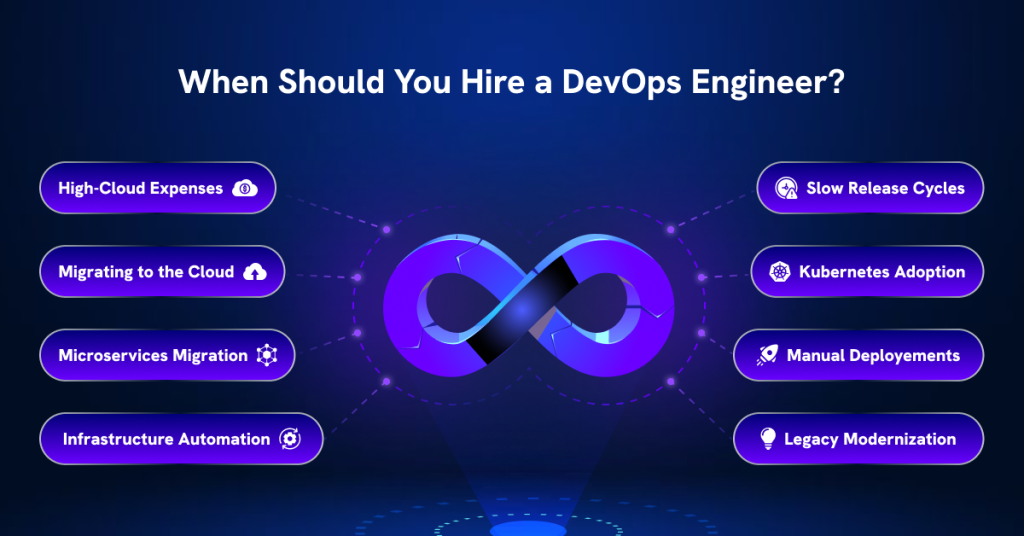
While companies hire DevOps developers for many different reasons, certain challenges clearly indicate when it’s time to bring one on board.
If your business is experiencing any of the situations listed below, this checklist will help you identify whether hiring a dedicated DevOps engineer is the right move for your organization.
- Migrating to the cloud
- Scaling engineering teams
- Slow release cycles
- Manual deployments
- Kubernetes adoption
- Infrastructure automation
- Microservices migration
- High cloud expenses
- Legacy modernization
Build your DevOps capabilities with experienced engineers while avoiding the time and costs involved in traditional recruitment.
What Does a DevOps Engineer Do?
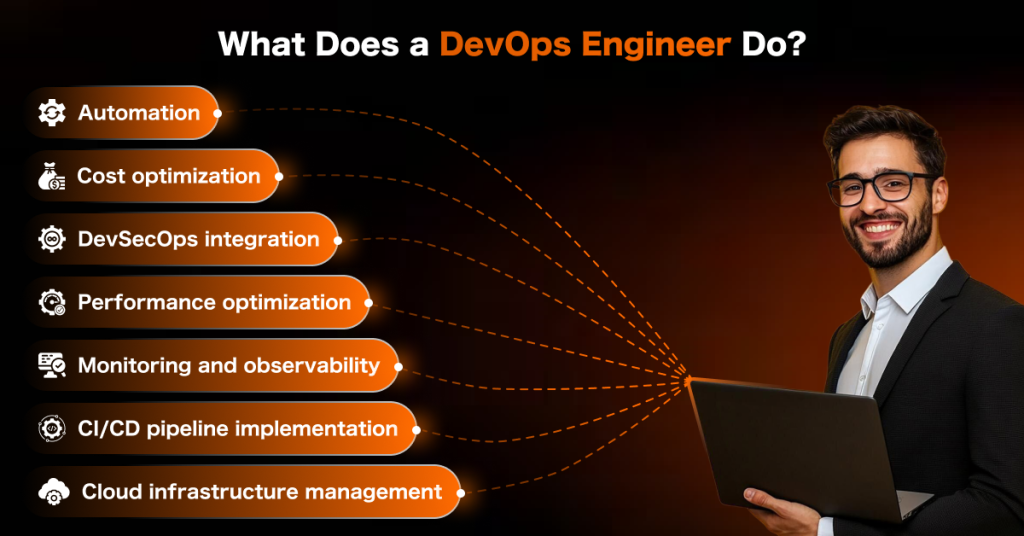
The role of DevOps engineers in an organization is highly versatile and crucial. They primarily lead and coordinate efforts across different teams to build, deploy and maintain a company’s software systems. But you need to know the DevOps engineer roles and responsibilities before you hire them.
The term “DevOps” is a combination of “development” and “operations,” representing a collaborative approach of product development and business operations. DevOps engineers follow effective engineering practices focused on automating various stages of the software development lifecycle.
They work with cutting-edge tools and technologies to streamline processes, shorten development cycles, increase release frequency and enable more reliable software deployments.
Here are the key skills to look for before you hire a dedicated DevOps developer
- CI/CD pipeline implementation
- Infrastructure as Code (IaC)
- Cloud infrastructure management
- Kubernetes and container orchestration
- Monitoring and observability
- Automation
- DevSecOps integration
- Performance optimization
- Cost optimization
Benefits of Hiring a Dedicated DevOps Engineer
If you haven’t hired a DevOps engineer yet or are considering hiring one for your business, here’s what you should know.
If you are not ready to hire a full-time DevOps engineer and are looking for a more flexible solution, here are the benefits of hiring a top dedicated DevOps engineer.
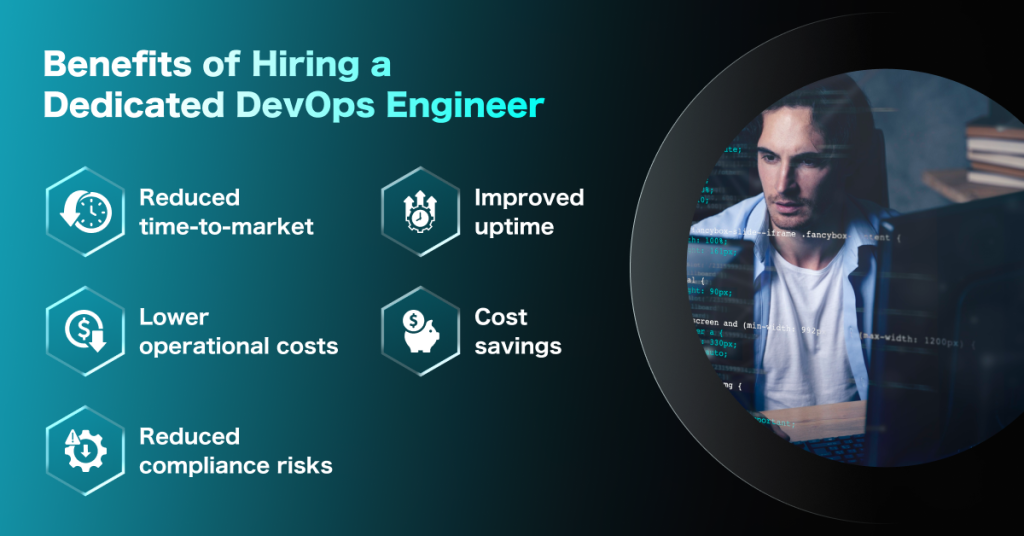
Reduced time-to-market
Having a full-time DevOps engineer can speeds-up the product architecture setup, automate CI/CD Pipelines, optimizes roadmap and enable faster product deployment instead of going through a tedious team-building process, which might affect the production time.
Lower Operational Costs
Hiring a DevOps engineer saves you plenty of time instead of building an in-house DevOps team from scratch. The DevOps engineer hiring process can help you nail your project the first time within the specified timeline, thereby saving operational costs, as the team takes over project management without stretching your existing budget.
Improved Uptime
Hiring dedicated DevOps developers for the entire project lifecycle ensures continuous application availability through proactive monitoring, automated processes and optimized infrastructure management, minimizing downtime and delivering reliable performance for uninterrupted business operations from day one.
Reduced Compliance Risks
The professional and well-equipped DevOps engineers follow industry standards and security-first best practices with automated compliance checks, consistent monitoring and streamlined post-launch tracking processes that minimize downtime and operational risks.
Cost Savings
Moreover, hiring an entire team of DevOps engineers helps save recruitment costs, salary management expenses, employee management efforts, infrastructure costs and other operational expenses. You only pay for the hired engineers instead of investing heavily in building an in-house DevOps team, while avoiding long-term management and maintenance costs.
Get dedicated DevOps engineers with the skills to optimize your infrastructure, automate workflows and support continuous delivery.
How to Hire the Right DevOps Engineer: A Step-by-Step Guide
The hiring process can involve multiple steps and require significant time and effort, but it can be managed efficiently with the right approach. We’ve compiled a comprehensive guide to hiring DevOps engineers, covering best practices to help you get it right the first time.
Here is a step-by-step strategic roadmap on how to effectively recruit top DevOps engineering talent or hire a DevOps team.
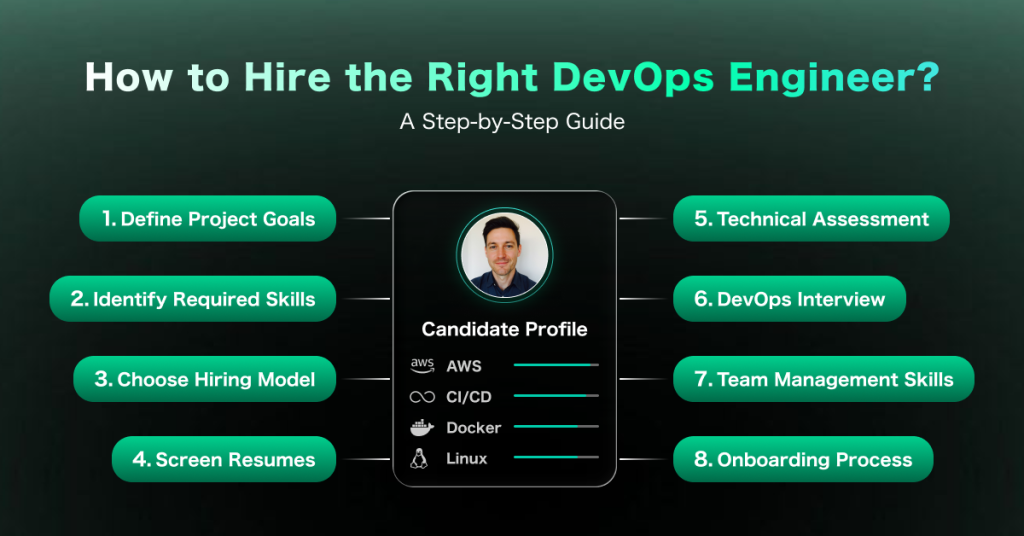
1. Define Project Goals
Before you hire a DevOps developer, understand the demands and requirements of the project you are working on. Determine whether your software development project actually needs a DevOps engineer. Identify your core bottlenecks, decide what you want to improve and define your technical stack requirements.
This will help you recruit someone with the right skills and expertise for your project’s development.
2. Identify Required Skills
Have a clear idea of what kind of technical skill set and experience level you are looking for in a DevOps engineer. Look for extensive experience of the candidate with cloud platforms such as Azure, AWS or Google Cloud, along with Docker, Kubernetes, Terraform, Ansible, CI/CD tools, scripting and monitoring solutions.
3. Choose Hiring Model
Make sure the hiring model you choose aligns with your business needs, project timeline and budget. Whether you need a full-time employee, a freelancer, a dedicated team of engineers or an offshore development team, choose the option that best matches your enterprise software development requirements.
Decide on the hiring model before starting the recruitment process and clearly define your budget based on the skills and experience required for the role.
4. Screen Resumes
Don’t immediately start interviewing every resume you receive. Instead, screen the resumes beforehand to avoid wasting time on unqualified candidates. Review their years of experience, the projects they have worked on, the organizations they have worked for, their technical skills and whether they meet your professional requirements.
This screening process helps you shortlist and finalize the most suitable candidates before moving on to the interview stage.
5. Conduct Technical Assessment
Test and evaluate each candidate’s technical knowledge by giving them coding exercises, infrastructure design tasks or troubleshooting DevOps challenges.
Assess their DevOps engineering skills in automating software deployments, configuring CI/CD pipelines, infrastructure coding, managing containers and how quickly they can resolve real-world DevOps issues.
Tell us what your project requirements and we will help you find experienced DevOps talent that matches your technical and business needs.
6. DevOps Architecture Interview
Test their theoretical knowledge and evaluate how clearly they can explain concepts, lead projects or provide constant support with strong communication skills.
Assess whether they are confident in system architecture, handling DevOps bottlenecks and challenges and measure their strategic thinking and technical decision-making abilities.
7. Team Management Skills
Ensure the candidate communicates effectively, works well in a cross-functional team, owns high-spirit leadership skills and is flexible enough to adapt to changing business models, security compliance requirements, operational hurdles, quality assurance standards and technical requirements.
8. Smooth Onboarding Process
Onboard the candidates by including them into existing project to evaluate the engineer’s technical skills, communication, work quality and ability to integrate with your existing workflows. It also helps the selected DevOps engineer become familiar with your organization’s infrastructure, tools and development processes for project management.
Recommended Reading
Cost to Hire a DevOps Engineer
Let’s discuss the cost and the budget you have to allocate to hire a DevOps engineer based on their experience level, skill set, role and responsibilities so that you don’t have to make major changes after recruitment or go over budget.
The below-mentioned price tags are hourly-based. There are also organizations and software development service companies that charge you per project or provide a team of engineers for a specific period instead of billing you hourly. You can try Contus Tech, Appinventiv and more to explore such pricing structures.
Junior Devops Developer
They are mostly entry-level developers or new to the role, so hiring such a candidate is going to cost you $40 to $60 per hour.
Mid-level Devops Developer
Advanced-level engineers with several years of experience in DevOps charge $60 to $100 per hour.
Senior Devops Developer
Expert engineers with vast experience and a proven track record of successfully delivering DevOps implementations can charge $100 to over $150 per hour.
Get experienced DevOps professionals without the cost and complexity of expanding your in-house team.
Why Hire DevOps Engineers from CONTUS Tech
You might be wondering whether hiring DevOps engineers can be a smooth sail, but how to do it and which services need to be approached can be challenging. We have conducted extensive research and found several software development service providers that offer hiring engineer packages based on your business needs and project scope. We suggest CONTUS Tech to help businesses and enterprises effortlessly hire DevOps engineers instead of going through a lengthy hiring process.
Headquartered in Chennai and having established its presence across the USA, Europe, UAE, Africa, and more, CONTUS Tech has been steadily focusing on next-level software deployment solutions that fast-track your project delivery with quality, reliability and efficiency.
They mainly provide services like DevOps Consulting Services, DevOps Implementation & Containerization, DevOps CI/CD Services, DevOps Release Management and Orchestration, Infrastructure and Configuration Management, and Security/Monitoring, which help you take your product deployments to high-level performance.
If you are looking for a team that purely focuses on a clear-cut DevOps Services Operations Strategy by offering a clear roadmap covering Project Discovery, Planning, Roadmap Creation and Execution, then CONTUS Tech can be your reliable software services partner that can take care of the entire DevOps lifecycle end-to-end.
Whether you want DevOps engineers for hire, optimize your cloud infrastructure, automate deployment workflows, or build scalable DevOps solutions, CONTUS Tech ensures seamless DevOps implementation and measurable outcomes from strategy planning to deployment and ongoing support.
Get in Touch. Let’s discuss your project and build something extraordinary!
FAQ’s for Hiring Devops Engineers
1. What skills should a DevOps engineer have?
A good and professional DevOps engineer candidate must possess skills such as CI/CD pipeline implementation, Infrastructure as Code (IaC), cloud infrastructure management, Kubernetes and container orchestration, monitoring and observability, automation, DevSecOps integration, performance optimization and cost optimization for the betterment of organizational operations.
2. How much does it cost to hire a DevOps engineer?
The hiring cost is based on the experience level of the DevOps engineer, such as beginner level, mid-level, or expert level. Some services apply costs on an hourly basis, while others charge based on the project, entire team, or offshore hiring model. The hourly charges for beginner-level engineers start at $40 per hour, while expert-level engineers can charge up to $150 per hour.
3. Should I hire a remote DevOps engineer or build an in-house team?
Hiring remote DevOps engineering developers is much easier, cost-effective, and seamless compared to building an in-house team, where you have to go through a tedious process of advertising, recruiting, conducting interviews, completing the hiring process, paying them every month, and managing them while taking full responsibility.
At the same time, you also have to focus on your project. So, if you are looking for a smarter and easier option, hiring DevOps engineers is the best choice.
4. How long does it take to hire a DevOps engineer?
It might take within a week if you are approaching a well-established and tech-savvy software development service provider with a proven track record of DevOps engineers for hire.
5. Can a DevOps engineer help migrate applications to the cloud?
Yes, they would migrate apps to the cloud, as this is one of their standard approaches and a must-have skill set.


