



Did you know that so many leading tech companies are hiring full stack developers for their ability to work across multiple technology stacks?
Hiring a full stack developer can lead to cost savings by eliminating the need for multiple developers – Streamlining the development process & enhancing efficiency. Let’s discuss about:
➡️ Why do businesses need to hire full stack developers?
➡️ How full stack developers can change the fortunes of brands?
➡️ Know how to find full stack developers with enough experience
➡️ Hiring the right fit: Freelancers / In-House / Outsourcing
➡️ What skills and qualifications are needed to hire dedicated full stack developer?
➡️ Top full stack development company to collaborate with
➡️ Know where to find full stack developer online
➡️ And a true-blue technical checklist that you’d be needing
Whether you are a startup seeking agility or an enterprise wanting to go all guns blazing – Now is the time to hire full stack developers to drive innovation towards your business dream like never before. Let’s dive in.
Get experienced full stack developers ready to start building your project within 48 hours.
What Is a Full Stack Developer?
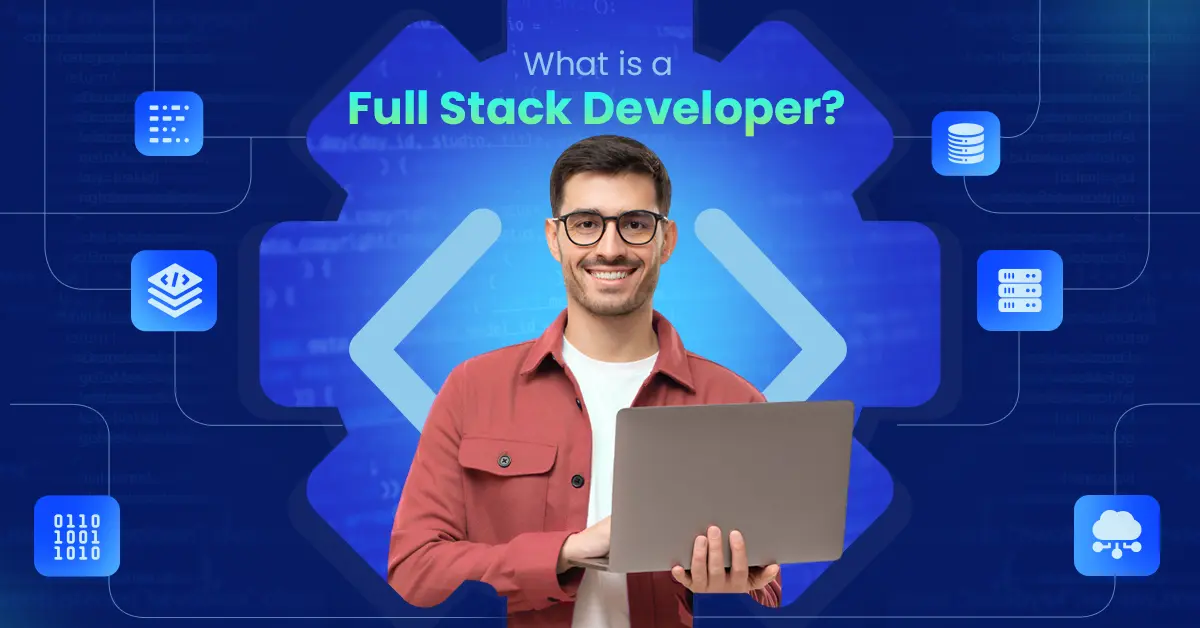
A Full Stack Developer is a specialist who can build front and back-end digital products, develop software solutions, and transform your business. They create the digital touchpoints that users see and interact with, like buttons, forms, and layout. But they also handle the BTS work like:
- Storing data, processing orders,
- And keep everything running smoothly.
They are like the architects who design both the storefront and the warehouse.
Instead of juggling multiple specialists for different projects and roles, you can hire Full Stack Developers who understand the whole operations. This means,
- Faster development,
- Fewer miscommunications,
- And more seamless UX for customers.
Whether you are launching a new a brandishing website or super app development, a Full Stack Developer will bring your vision to life, effectively and exactly the way you want.
Let’s understand how hiring a full stack developer will bring real value to your business.
What Does a Full Stack Developer Do?
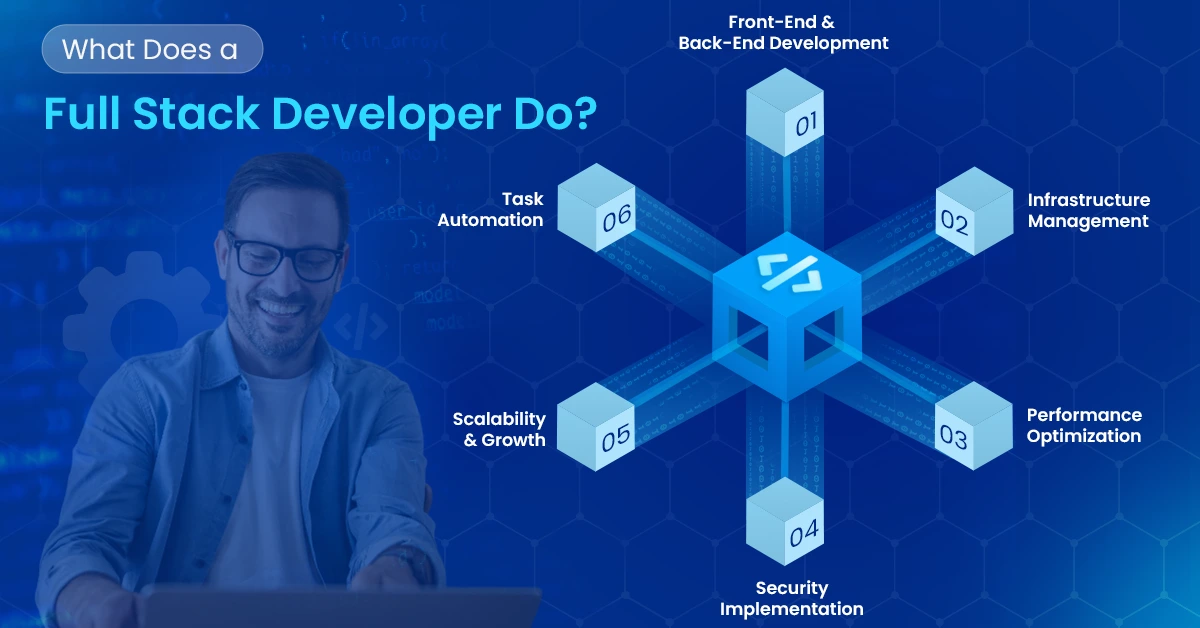
A full stack developer takes complete responsibility for designing, building, maintaining, and managing both front end interface (that users see) and backend (in server side) of web applications. They ensure the apps and sites perform with top quality at all times.
| Key Role | Action |
|---|---|
| Front-End & Back-End Development | Builds apps, crafts APIs |
| Infrastructure Management | Sets up servers, handles databases |
| Performance Optimization | Boosts speed, fixes issues |
| Security Implementation | Protects data, adds authentication |
| Scalability & Growth | Expands systems, updates tech |
| Task Automation | Automates tasks, writes scripts |
1️⃣ Build websites and apps: Full stack web developers can build digital web and mobile apps that align with your business with sleek functionality and UX.
2️⃣ API creation and management: They ensure fast data transfer between systems by integrating and optimizing workflows.
3️⃣ Servers configuration and maintenance: Full stack developers ensure uptime, overall load balancing, smooth performance of the created websites, apps, and cloud based services.
4️⃣ Database design and integration: They can structure, store, and manage data effectively online for faster info retrieval and secure access for business operations.
5️⃣ Increase the overall speed: They implement caching, compress, decompression, database indexing and more, to improve loading times, user interaction, overall performance and speed.
6️⃣ Business data safeguarding: A full stack developer can integrate w/ encryption, authorised based authentication, fireswalls, etc. to keep all data safe.
7️⃣ Scaling up of digital infrastructure: They play a role in upgrading architecture, optimizing resources, and improving system flexibility that’d withstand the rise of traffic spike during business expansion.
8️⃣ Automation and authentication of repetitive tasks: By developing scripts, bots, and workflows – A full stack developer can reduce manual tasks and improve efficiency.
9️⃣ Troubleshooting of performance issues: They understand and identify the bottlenecks, debug errors, and optimize the built apps/web to prevent downtime and slow performance.
🔟 Work in accordance with the latest tech: A full stack developer regularly updates framework, data libraries, and services to manage top security, compatibility, and peak performance of the app or site developed.
What Is the Difference Between Full Stack Developer and Software Developer?
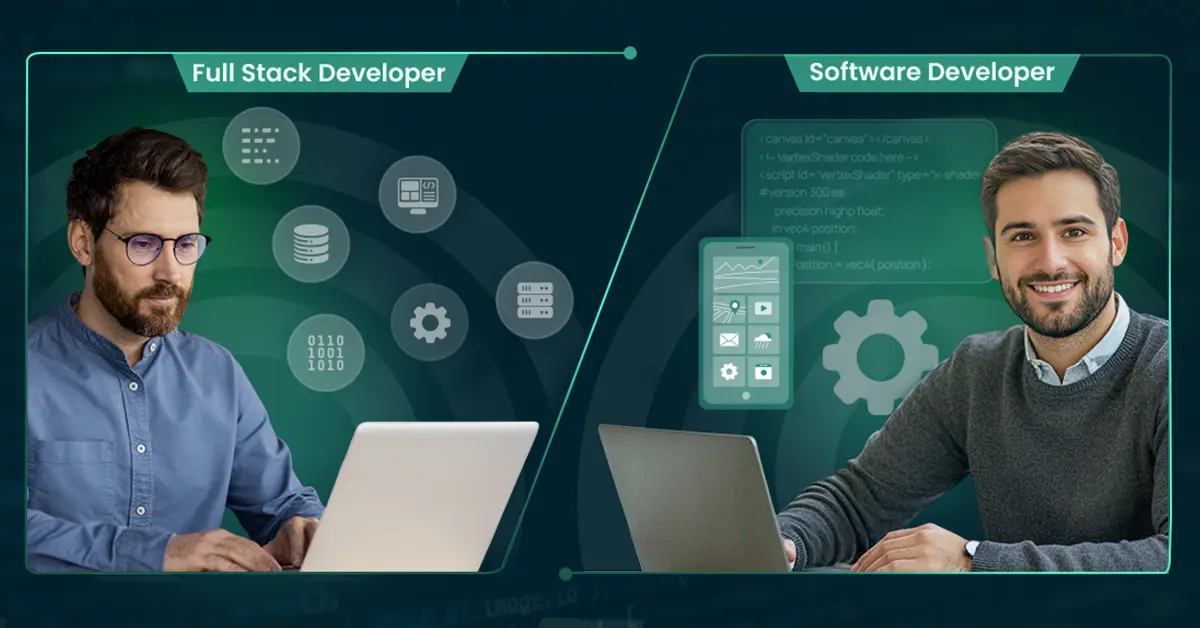
| Full Stack Developer | Software Developer |
|---|---|
| A full stack developer works on both the front end and back end by handling the entire web or app development process. | A software developer focuses only on specific areas like web, mobile, or PC apps, either on the front end or back end. |
Why Do Businesses Need to Hire dedicated Full Stack Developers?
Businesses hire full stack web developer as they can fasten development, build and manage both the frontend and backend user interfaces, cut costs, ensure smooth functionality of the whole application lifecycle, great user experience, efficient communication, and data processing for apps, websites, and digital platforms.
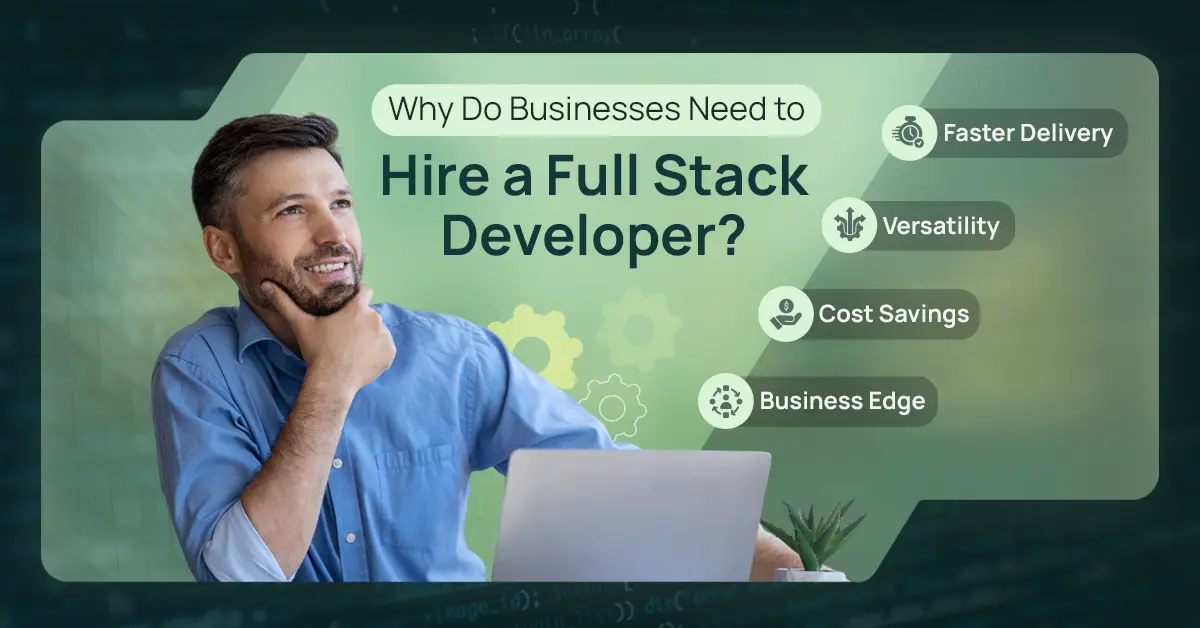
| Advantage | For Startups | For Enterprises |
|---|---|---|
| Faster Delivery | Launch MVPs quickly | Speed up project timelines |
| Versatility | One developer, with many roles | Bridge team gaps |
| Cost Savings | Save on hiring costs | Lower operational expenses |
| Business Edge | Adapt and pivot fast | Boost team collaboration |
Instead of hiring separately for frontend and backend, you can get one (or a few full stack developers) who can understand the entire process. This means:
- Cost effective for small businesses,
- Fewer bottlenecks during the WIP phase,
- Leverages for scaling up your enterprise
- Faster decision-making & development,
- Continuous innovation by bringing latest tech,
- And smoother execution of the project.
| Hiring Full Stack Developers for Startups | Hiring Full Stack Developers for Enterprises |
|---|---|
| As speed and agility is everything, a full stack developer can help you build an MVP quickly, testing ideas without waiting for multiple teams to coordinate. | Full stack developers can help to streamline app or site development by bridging gaps between departments and ensuring all projects move at brisk pace. |
Reduce development costs with skilled full stack developers delivering scalable solutions for your business.
What Skills Should You Look for in Full-Stack Developers?
If you’re hiring a full-stack developer, avoid focusing too much on the list of programming languages they know or the vast range of skills they’re expected to possess.
Being technically skilled doesn’t automatically mean they can build a flagship product.
Based on the experience of full-stack developers and the successful projects they’ve delivered, hire the engineering teams based on what actually matters when evaluating a full-stack developer:
Frontend
To hire a Frontend developer for your projects, check if they have expertise in the following areas:
- React developers: Their skill set is basically based on component-based UI development with long-lasting, feature-rich components.
- Angular developers: Focus on building a structured framework for building more powerful enterprise-level web applications.
- Vue.js developers: Need a more lightweight and flexible framework for creating more interactive and engaging user interfaces.
Backend
For backend developers, make sure they are well-equipped with the necessary skills and proficient in the following areas.
- Node.js: Node.js is a free, open-source JavaScript runtime environment that allows developers to execute JavaScript code outside of a web browser
- NET: Software engineer who builds web, mobile, desktop, and enterprise applications using Microsoft’s .NET platform
- Java: Write, test and maintain software using the Java programming language and the Java Virtual Machine (JVM)
- Python: Write, test, and maintain software, backend systems and automated scripts using the Python Career Guide infrastructure
Databases
Before hiring database developers, make sure they have expertise in the following technologies and solutions:
- MySQL: Build, deploy and manage relational & non-relational databases in the secure Amazon Cloud.
- PostgreSQL: Design, build, optimize, and maintain relational databases using PostgreSQL, ensuring high performance, data integrity and data workloads
- MongoDB: Connect, code, query and manage your data from the infrastructure you know best, designed for flexible, document-based data storage.
APIs
- REST: A software engineer who builds and maintains web services using Representational State Transfer (REST) architecture to let different software systems respond to each other
- GraphQL: Build and optimize flexible, strongly typed APIs that allow clients to request exact data structures in a single request
Cloud & DevOps
- AWS: Builds, tests, deploys, and manages cloud-based applications using Amazon Web Services services like Lambda, S3, DynamoDB, and API Gateway
Azure: Designs, builds, tests, and manages cloud applications and services on Microsoft Azure - Google Cloud: A suite of modular cloud computing services and infrastructure provided by Google
- Docker: It solves packaging code, runtime, system tools, libraries and settings together into a single immutable package
- CI/CD: Builds and maintains automated pipelines that streamline how software is tested, integrated and deployed
Types of Full Stack Developers You Can Hire
There are various types of full-stack developers you can hire to build software. Each technology stack serves unique purposes and caters to the specific needs of different hiring teams:
| Type of Full Stack Developer | Technology Stack |
| MERN Stack Developer | MongoDB, Express.js, React, Node.js |
| MEAN Stack Developer | MongoDB, Express.js, Angular, Node.js |
| MEVN Stack Developer | MongoDB, Express.js, Vue.js, Node.js |
| .NET Full Stack Developer | .NET / ASP.NET Core, React / Angular, SQL Server |
| Java Full Stack Developer | Java + Spring Boot, React / Angular, SQL databases |
| Python Full Stack Developer | Django / Flask, React / Vue, PostgreSQL |
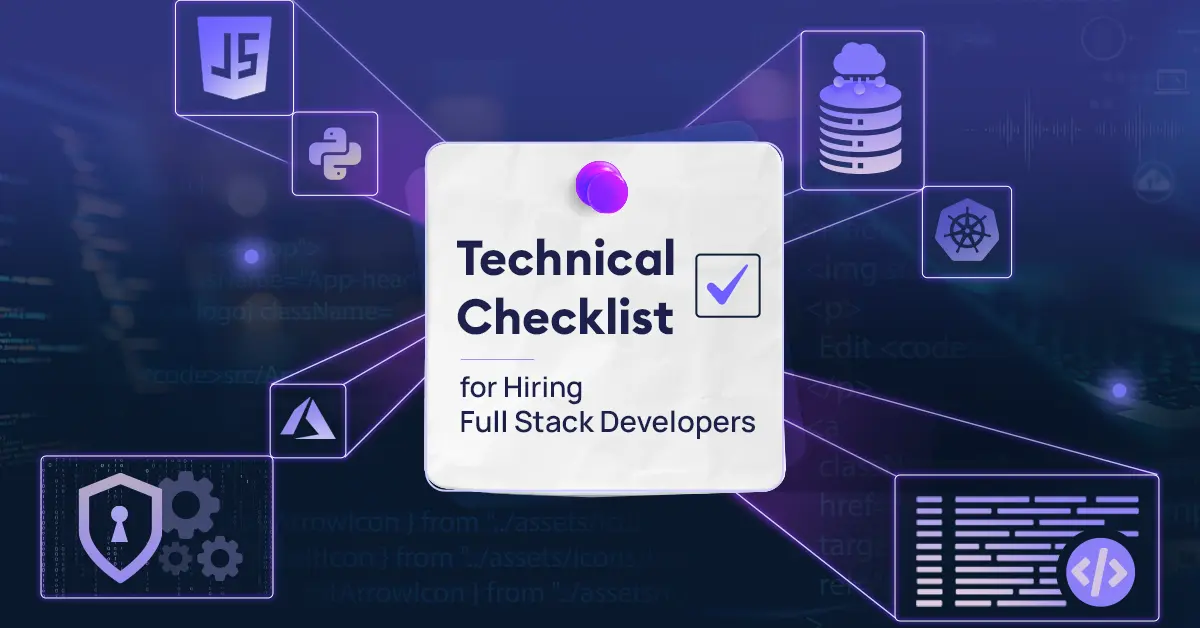
Technical Checklist for Hiring Full Stack Developers
When hiring a full stack developer, it’s crucial to evaluate the candidate’s understanding of how to plan, design, build, secure, test, deploy and manage apps across the entire technology stack.
So before you look for a well-rounded full-stack developer you should make sure they must be comfortable across these areas while also knowing when to collaborate with Devops engineers, specialized architects, security teams and database professionals.
1. App Architecture & System Design
For such requirements, interview and assess an architectural developer on their technical approach to building applications that evolve and develop as requirements and user demand grow.
See if they have ample experience in the following technical areas:
- Choose the right technology based on project requirements
- Break down complex business systems into manageable tech components
- Analyze service-to-service communication and dependencies
- Build a roadmap on architectural scalability, availability and failure scenarios
2. Code Quality & Development Practices
Having readable, well-defined code makes it easier for teams to enhance applications and resolve quality issues over time.
Evaluate their expertise and ability to:
- Roll out readable, modular and reusable code
- Choose to follow appropriate coding methodology and design patterns
- Apply meaningful code naming and documentation practices
- Restructure existing code without introducing new or unwanted risk
- Conduct code reviews and respond respond effectively
3. API Integration & Communication
To build modern apps you need to integrate APIs to connect frontend interfaces, backend services, databases and third-party platforms.
The major areas to assess API integration include:
- Building and delivering RESTful or GraphQL APIs
- Adapting API authentication, authorization and API security
- Managing API errors, bugs, timeouts and retries
- Working with third-party integrations and external services
- Understanding API versioning and backward compatibility
4. Database Management & Optimization
For a seamless database performance you need to work on application speed, reliability and scalability.
An hired developer should be able to :
- Build database schema design and data relationships
- Write efficient queries and identifying bottlenecks
- Manage indexes, transactions and connection management
- Safe database migrations and data integrity
- Optimize smart database techniques for evolving datasets
5. Security Practices
Its highly essential to focus on security throughout every layer of app development
Check if the developers have practical experience of:
- Authentication and role-based authorization
- Secure passwords, tokens and confidential information
- Intstall protection validation against common web vulnerabilities
- Secure every API and database access
- Focus on dependency and configuration security
6. Testing & Debugging
Focus on strong app testing and troubleshooting skills to help developers deliver reliable apps and resolve on time production issues.
Look for developers with a vast experience on:
- Managing unit, integration and end-to-end testing
- Identifying and replacing application defects
- Debugging frontend, backend and database issues
- Using logs and monitoring data to investigate failures
- Preventing regressions when introducing new features
7. Cloud Deployment & Infrastructure
A full stack developer should understand the complete process of taking an application from a local development environment to production.
The relevant cloud-deployment experience must include:
- Streamline app deployment to AWS, Azure or Google Cloud
- Top -notch skill on working with containers and Docker
- Efficiency manage app environments and configurations
- Understanding cloud storage, databases and compute services
- Monitoring your overall app health and production performance
8. Version Control & CI/CD
A well-monitored and reliable version control system, combined with automated delivery processes, helps development teams collaborate effectively and release software smoothly.
Assess the developers experience and familiarity with:
- Git-based workflows and collaborative branching strategies
- Pull requests, code reviews and merge practices
- Automate building, testing and deployment pipelines
- Manage CI/CD tools and release streamlined workflows
- Managing deployment environments and rollback processes
What Are the Roles and Responsibilities of Full Stack Developers?
Full stack developers are responsible for the complete application development and lifecycle, right from frontend UI to the backend deployment and service side logic!
They ensure all factors like designing, developing, testing, and overall maintenance are in the same bandwidth. So, make sure to tick the below boxes when you are hiring full stack developers for your projects.
| Roles & Responsibilities | Description |
|---|---|
| Business Alignment | Translates business needs into functional digital solutions. |
| Database Architecture | Designs and manages efficient data storage and retrieval. |
| System Security | Implements security measures to protect data. |
| Performance Optimization | Ensures systems handle growth and traffic effectively. |
| Team Coordination | Facilitates communication and collaboration across teams. |
| Strategic Partnership | Provides scalable and future-ready digital solutions. |
✅ Roles of Full Stack Developer
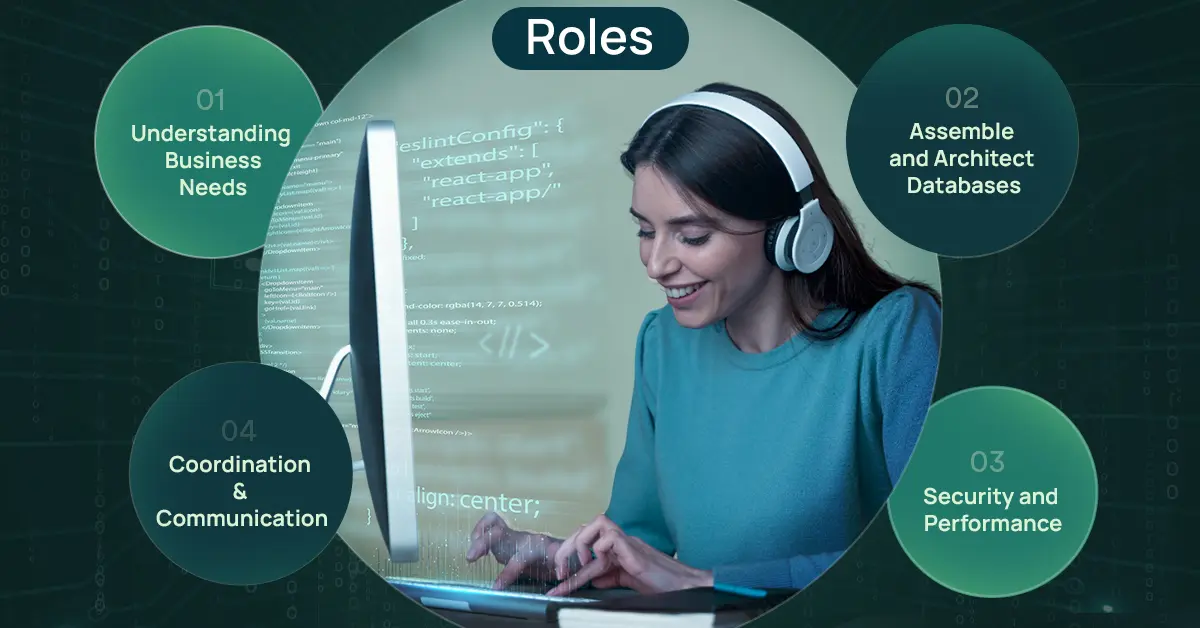
Before discussing the intricacies of hiring a full stack developer, let’s understand that the main role of a full stack developer is to build, connect, and optimize every part of the system (app, website, etc.) to ensure it runs smoothly. They are the backbone of the whole process of digital product development.
- Understanding Business Needs
Full stack developers understand what your business wants and translate it into functional digital solutions. They generate engaging UIs that keep customers hooked while also ensuring the backend process data runs smoothly.
In many organizations undergoing modernization – their technical execution supports broader digital strategies often guided by the best digital transformation consulting practices.
- Assemble and Architect Databases
Full stack developers play a prime role in architecting databases that store and retrieve data quickly to keep operations running smoothly at all times. They manage services to ensure websites and apps stay agile and online, able to handle traffic spikes and load fast.
- Security and Performance
Well, security is a big responsibility! They implement security and data protection measures to keep all business and customer data safe. Performance matters, too—they also fine–tune systems that can handle growing users without crashes.
- Coordination and Communication
Alongside development and data security, Full stack developers also coordinate b/w teams to reduce business silos and keep all projects on track – whether it’s launching MVP or scaling an existing project – they adapt the technology to business growth.
To conclude, a full stack developer is more than just a coder – Find Full Stack Developers who can also be your strategic partners, ensure your digital presence is scalable and future-ready. Now, let’s look at the top responsibilities that full stack developers come along with.
✅ Responsibilities of Full Stack Developers
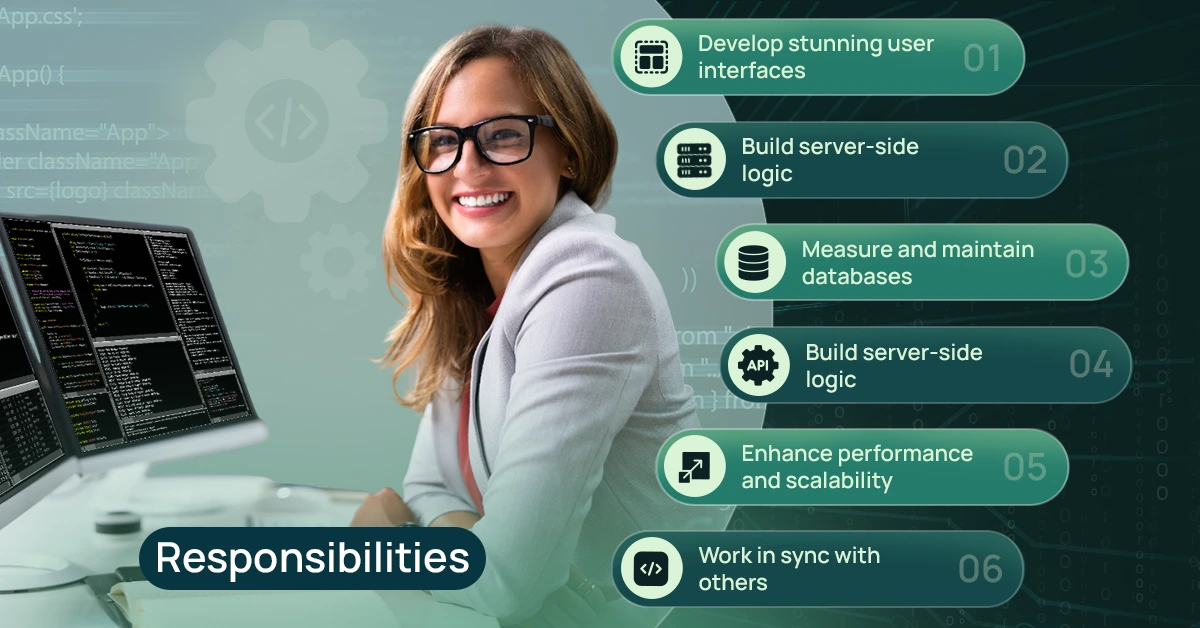
Full stack developers are primarily responsible for the complete software and app development, right from designing and developing the front user interface to setting up seamless server side back-end systems in place for optimal performance at peak.
- Develop stunning user interfaces: Full stack developers should create seamless and aesthetically pleasing web and app experiences using HTML, CSS, and JavaScript frameworks like React or Angular.
- Build server-side logic: This should be able to amplify the backbone of important apps using languages like NodeJS, Python, Ruby on Rails, and more to ensure smooth data processing and better efficiency.
- Measure and maintain databases: Data repositories that can store, structure, and bring forth data efficiently with MySQL, MongoDB, and PostgreSQL for faster operations and secure storage of all critical data.
- Build and integrate APIs: A full stack developer should connect apps to external tools like Stripe for payment processing and QAuth for safe authentication to level up functionality without reinventing the wheel.
- Enhance performance and scalability: They should optimize the apps and websites for speed, fix glitches, if any, and build a system that can handle growth without downtime or site slowdowns.
- Work in sync with others: Collaborate with testers, developers, designers, and stakeholders to document code properly, emphasize transparency, and give space for long-term stability with frequent updates.
Let’s move ahead to examine what most companies expect and look for when they hire full stack developers based on skillsets, educational qualifications, certifications, and more.
These responsibilities highlight why businesses rely on experienced enterprise application development services providers to build high performing digital solutions.
Recommended Reading
What Skills and Qualifications Should You Look for When Hiring a Full Stack Developer?
To hire remote software developers for full-stack, look for developers experienced in front-end and back-end technologies, that include programming languages like JavaScript, HTML, CSS, and back-end technologies like Node.js, Python, or Java, along with database management, UI/UX principles, web frameworks, version control, and in some cases, cross-platform mobile skills if you’re also looking to hire Flutter developer for a unified frontend experience.
✅ Skills to Look for Full Stack Developer
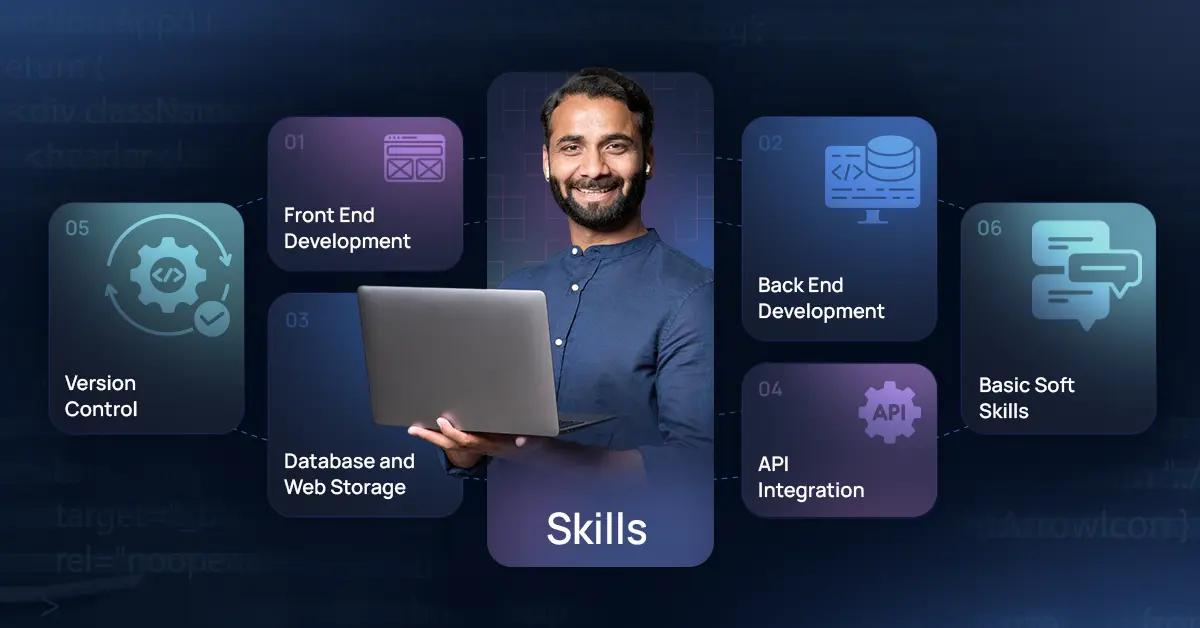
An experienced full stack developer should have front-end and back-end development skills, database management, API integration, basic UI/UX design, and proficiency in NodeJS, Python, Ruby, and more to build scalable digital products. Let’s now look at the skill in depth.
| Skills | Descriptions |
|---|---|
| Front End Development | Must have strong skills in HTML, CSS, JavaScript frameworks like React or Vue to build intuitive, easy to user interfaces. |
| Back End Development | Prior exposure and expertise in NodeJS, Python, Ruby or PHP to handle server side logics, data processing, and more. |
| Database and Web Storage | Working experience in SQL, MongoDB, or NoSQL database for storing and managing data without any breach. |
| API Integration | Using RESTful APIs and HTTP, full stack developers should connect apps w/ external services and blend integrations. |
| Version Control | Always a sweet spot if they know to leverage Git and GitHub for collaboration, tacking changes, and clean codebases. |
| Basic Soft Skills | Will be effective to work w/ strong speaking, teamwork, problem solving skills, and being adapted to challenges. |
Get experienced developers to handle frontend, backend, APIs, databases, and application development.
✅ Qualifications to Look for Full Stack Developer
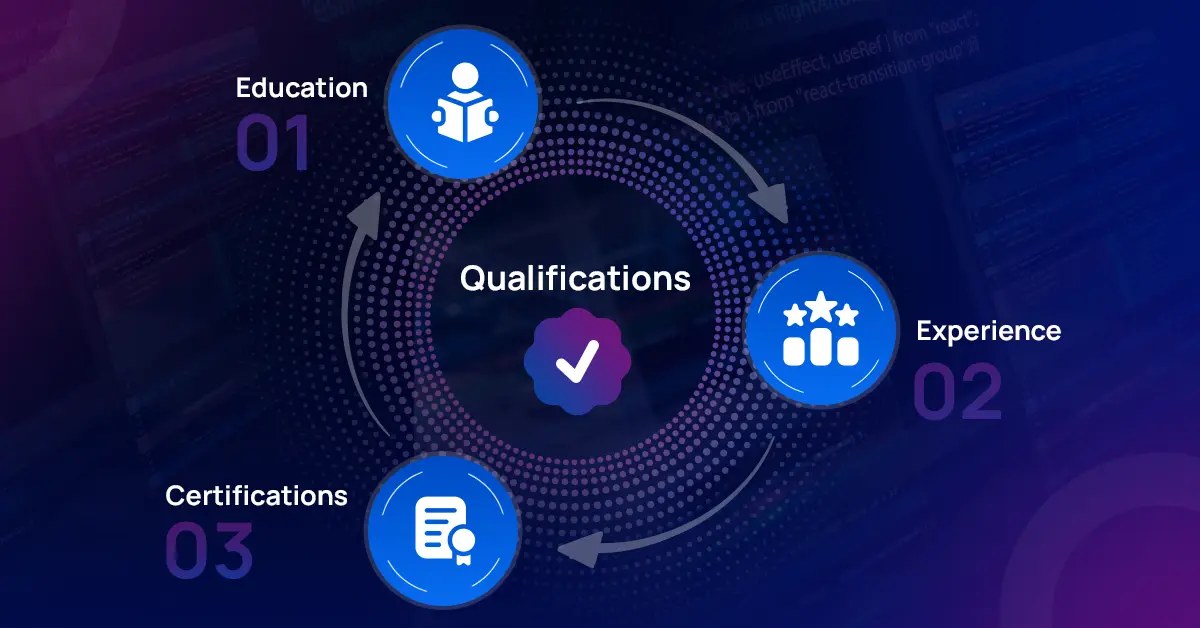
Full stack developers need to have a sound understanding of both front-end & back-end technologies, proficiencies in programming languages, creating frameworks, managing databases, critical thinking skills and communication skills to be successful.
| Education | Experience | Certifications |
|---|---|---|
| ~ Relevant degree ~ Coding bootcamps ~ Self learning |
~ Junior: 1 – 3 yrs ~ Mid: 3 – 5 yrs ~ Senior: 5+ yrs |
~ AWS Certified ~ Full Stack Nanodegree ~ Front-end / Back-end |
FullStack Developers Education Level:
Talking about the Educational Background, While having a computer science degree is helpful, many full stack developers succeed through coding bootcamps or self learning via Udemy, FreeCodeCamp, and more.
FullStack Developers Experience Levels:
| Experience Level | Years | Descriptions |
|---|---|---|
| Junior | 1-3 years | UI development, API integration, database queries |
| Mid | 3-5 years | Full application logic, performance optimization, cloud deployments |
| Senior | 5+ years | Scalable architecture, team leadership, security enforcement |
Certifications for FullStack Developers:
| Certification | Focus Area |
|---|---|
| AWS Certified | Validates cloud computing expertise |
| Full Stack Nanodegree | Covers both front-end and back-end development |
| Framework Certifications | Specializes in React, Node.js, Django, and more |
Note: When full stack developers have certifications, it adds credibility, but they won’t be the sole yardstick for measuring.
They are defined by how effectively they approach problems and build digital solutions from scratch towards scale.
Additionally, being proficient in JavaScript, Python, SQL, DevOps, and API Development is essential. Mastering frameworks like React and Angular can bring in more versatility.
Continuous learning is the bottom line for full stack developers to stay updated with the latest technologies and trends to thrive ahead.
How to Hire a Full Stack Developer? (7 Key Steps to Hire the Right Talents)
To hire a full-stack developer, start by defining your project requirements, then post a clear job description, screen resumes, conduct in-depth technical interviews, and assess problem-solving skills. Check candidates based on their expertise in front-end and back-end development, programming languages, frameworks, and databases before making an offer.
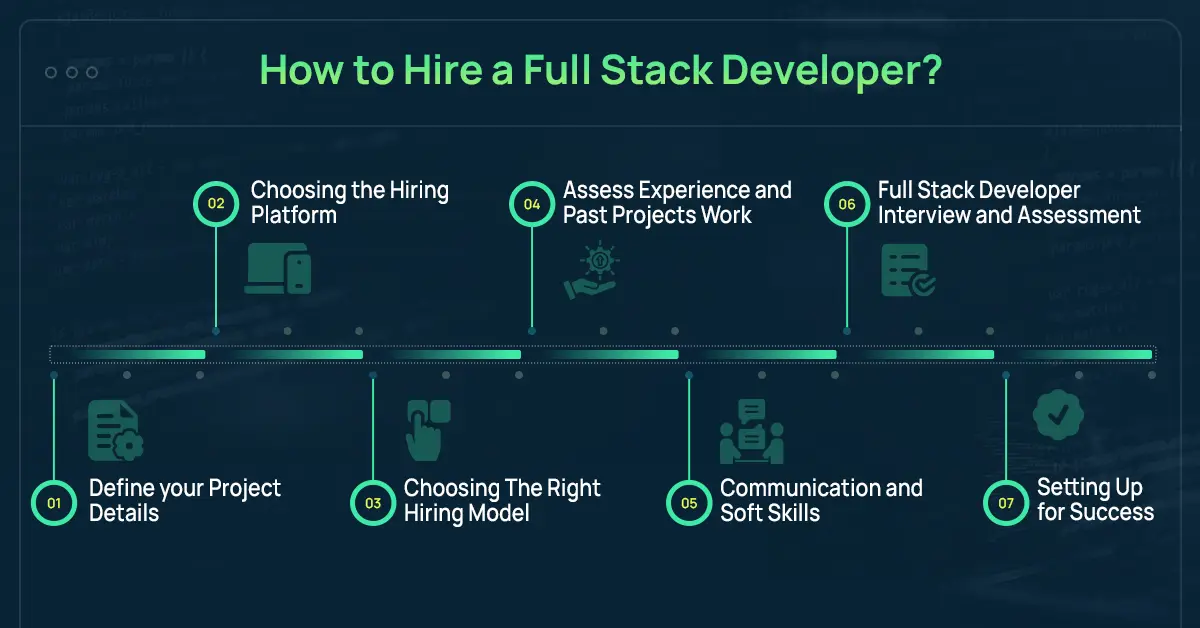
| Hiring Steps | Key Actions | Considerations |
|---|---|---|
| Project Clarity | Define scope, goals, tech | Project type, business needs |
| Choosing a Platform | Select hiring source | LinkedIn, freelancers, companies |
| Selecting a Hiring Model | Choose type of developer | Freelance, team, in-house |
| Technical Skill Assessment | Review portfolio, code | Technical & problem-solving |
| Evaluating Soft Skills | Assess communication skills | Team fit, adaptability |
| Conducting a Technical Test | Interviews, coding challenges | Align skills with project |
| Onboarding & Integration | Set goals, provide tools | Clear expectations, smooth start |
1️⃣ Define your Project Details
Even before you set out to hire a full stack developer, outline your project management scope, business goals, and tech requirements. Whether you need a web application, mobile application, or complex backend system, defining these will help you target the right people without wandering.
2️⃣ Choosing the Hiring Platform
There are many platforms to Find Full Stack Developers online that can make the process easy, effective, and with people who can fit into your business needs.
- For full-time or long-term hires, explore professional networks like LinkedIn or partner with CONTUS Tech to hire dedicated development teams.
- For freelance or short-term projects, consider platforms like Upwork, Toptal, or Fiverr, where you can quickly onboard experienced developers.
Recommended: Partner with companies like CONTUS Tech, Turing, etc.
The advantage of collaborating with enterprises is that they have vetted professional and in-house full stack developers who have years of experience working with projects of all sizes and scales.
It makes it even easier and more effective when you hire remote software developers, as they can get the job done from wherever they are.
Get access to pre-vetted developers with the skills needed to match your project requirements.
3️⃣ Choosing The Right Hiring Model
| Freelancers | Dedicated Dev Team | In-House Developers |
|---|---|---|
| Are cost effective and can be recommended for quick projects, but not advisable for long commitment. | Choosing a skilled & vetted full stack development team from CONTUS Tech can help scale your business fast. | Ideal if there is ongoing and consistent work, but could cost more and need a bigger budget. |
When you are hiring a dedicated full stack developer, it gives more space for them to focus on just one project at a time to get the best results and optimal solutions.
Get to know about the full stack development team from CONTUS Tech with a combined working experience of 20+ years and building 1000s of apps together.
4️⃣ Assess Experience and Past Projects Work
Review portfolios before you hire a full stack developer. Also, check their GitHub repositories and previous projects to deeply understand their technical skills, code quality, and problem-solving abilities.
5️⃣ Communication and Soft Skills
As much as technical skills matter for full stack developers, so do important skills like:
- Communication skills
- Adaptability with others
- And blending w/ the team.
When you’re hiring a full stack developer, you could conduct structured interviews to evaluate how they think, speak, and solve problems.
Or maybe you can take the safe and successful path of collaboration with companies that’ve vetted full stack developers. The latter option would be more effective and save loads of time.
6️⃣ Full Stack Developer Interview and Assessment
Make sure to include a few technical things in the interview questions, real-time problem-solving scenarios, and behavioural questions to get a strong grip that the full stack developers will be assigned and aligned with/ your business needs and project requirements.
Here Are a Few Interview Questions for Hiring Full Stack Developers:
- Which front-end and back-end frameworks do you specialize in?
- How do you optimize API performance and reduce latency?
- What strategies do you use to improve database query efficiency?
- How do you implement authentication and authorization in a full-stack app?
- What’s your approach to handling server-side caching?
- How do you debug memory leaks in a Node.js application?
- What techniques do you use for front-end performance optimization?
- How do you handle real-time data updates in a web app?
- What security best practices do you follow for full-stack development?
- How do you design scalable microservices architectures?
- How do you structure and manage state in a large-scale React or Vue application?
- What’s your approach to implementing CI/CD for a full-stack project?
- How do you handle database migrations in a production environment?
- What are your strategies for reducing bundle size in a front-end app?
- How do you monitor and log errors in a distributed system?
Note: The above interview questions can be taken for references only, as the interview type for hiring a full stack developer will vary based on the experience and skillsets of the full stack developers.
7️⃣ Setting Up for Success
After you hire a full stack developers, explain their project responsibilities completely to them.
- Set clear goals and expectations
- Use tools like Jira for update sharing
- And ensure a smooth workflow.
You can successfully hire vetted full stack developers by following the above steps – By hiring a full stack programmer who understands your brand vision and brings in long-term value with what they do to build your biz.
Full Stack Developer vs Full Stack Development Company
Here is a detailed comparison of hiring a full stack developer versus partnering with a full stack development company.
Compare the two options to determine which one best suits your project requirements and hiring needs.
Comparison Factor |
Hiring Full Stack Developer |
Full Stack Development Company |
Cost |
Basically more cost-effective for smaller projects or specific development needs. |
Requires a higher budget but provides access to a broader range of services and expertise. |
Technical Expertise |
They are usually specializd in a defined set of technologies and handles both frontend and backend development. |
Provides access to developers with expertise across multiple technologies, frameworks and platforms. |
Scalability |
Expanding the development team inbetween the project may require extra hiring and onboarding. |
You can effortlessly expand the development requirements based on changing project requirements |
Project Management |
The Project coordination, sprint, meeting and review process may need to be handled within your team. |
Often provides highly-experienced project managers and structured development processes with regular feedback, reviews and progress tracking. |
Backup Resources |
The continuity of the project may be affected if the developer becomes unavailable even one day. |
Can provide replacement or other exepeinced developers immediately when required. |
| Maintenance & Support | Product maintenance and support depends largely on the developer’s availability and workload | Usually offers ongoing maintenance, technical support and post-launch services. |
Time to Hire |
May take longer time to hire and find a developer with the right combination of skills and experience. |
Can help build and onboard a development team quickly based on project requirements. |
Long-Term Project Requirements |
Works as a most suitable option when you need consistent support from an individual developer. |
Works well for projects that requires a big team of experts, specialists, continuous development and post-launch technical support |
How to Choose the Right Full Stack Development Partner?
Before signing up with a full-stack development company, agency, or individual developer, find a partner who clearly understands your product objectives, technical requirements and security expectations.
They should also help you build a high-tech product roadmap with the right talent to create a great product from scratch.
1. Technical Expertise
Check the team’s technical expertise, analyze their areas of specialization, and assess whether they have the technical capabilities required for your product.
Your full-stack partner should also be able to recommend technologies based on your project’s specific requirements rather than relying on a particular technology stack.
2. Portfolio & Case Studies
Take a look at their previous portfolios, case studies, customer testimonials, and projects to understand the quality and complexity of the work the company has delivered.
Taking a deep dive into these will reveal how the team approached technical challenges, built solutions seamlessly and transformed project requirements into functional solutions.
3. Industry Experience
Having extensive industry experience and a strong track record of successfully delivered projects can help development teams understand your business requirements more effectively.
4. Client Reviews
Look for consistent and reliable feedback from previous clients. Pay attention to how quickly projects are delivered, the onboarding process, the speed of hiring additional team members and how efficiently issues are resolved.
Also, examine client feedback on technical quality, business understanding, internal communication, responsiveness, project delivery and post-launch support.
5. Development Process
A well-defined development process helps turn an idea into a structured, testable, and maintainable product.
Ask how the team handles discovery, requirements gathering, UI/UX design, development, testing, deployment, and subsequent improvements. Whether they follow Agile, Scrum or another approach, the process should provide transparency and allow requirements to evolve when necessary.
6. Security Practices
Security should be incorporated throughout the development lifecycle rather than addressed only before launch.
Assess how the partner handles authentication, authorization, data protection, secure APIs, access controls, vulnerability management, and secure cloud configurations. For SaaS and enterprise applications, also consider how they approach tenant isolation, privacy, and sensitive business data.
7. Communication
Effective communication keeps technical teams and business stakeholders aligned throughout the project.
Check how frequently the team provides updates, documents decisions, handles feedback, and communicates technical risks. A dedicated point of contact and transparent reporting can make collaboration easier, particularly for long-term development engagements.
8. Engagement Models
Choose a software engagement model that aligns with your project’s overall scope, timeline and required level of flexibility for a smooth delivery process. Take a close look at team composition, working hours, developer responsibilities and pricing structure clearly before starting the engagement.
9. Post-Launch Support
Launching a full-stack software apps is only one stage of the product lifecycle that speaks volumes about a development partner’s capabilities and should include ongoing maintenance, bug fixes, performance improvements, security updates, cloud management, feature enhancements and the ability to build SaaS technology products with seamless upgrades.
Choose CONTUS Tech to Hire a Full Stack Developers for Your Project
Finding and hiring a full stack developer takes time and effort. This is why top IT companies and leading brands worldwide choose full stack developers from companies that already have them.
CONTUS Tech has hundreds of experienced full stack developers ready to jump in and bring your project to life. There are so many benefits associated with hiring full stack developers:
- Cost savings, faster development,
- and the flexibility to handle both frontend and backend
With the rise of demand, having the right talent can give your business a competitive edge over others. Whether you need:
- fresh website or
- any app development,
The developers at CONTUS Tech assure you of smooth, effective, and high-quality solutions – Hire full stack developer, save time, cut costs, and get that big breakthrough your business needs. Ready to explore the top talents?
Need to source and hire dedicated full stack developers? Get matched with vetted developers within 3 days.
FAQs on How to Hire a Full Stack Developer:
1. How much does it cost to hire a full stack developer?
Cost to hire a full stack developers typically charge between $40 to $200 per hour on average. However, highly experienced engineers may command rates exceeding $100 per hour. The pricing is influenced by several factors, including the developer’s educational background, years of experience, technical proficiency, and knowledge of specific frameworks.
2. Why do businesses hire full stack developers?
Businesses hire full stack engineer for their versatility and end-to-end project development acumen. Our team of 200+ full stack developers is highly proficient in handling both front-end and back-end development and streamlining project workflows. Their consolidated expertise translates to faster development cycles, cost efficiency, and a holistic approach, ensuring holistic solutions for your web and mobile app development needs.
3. What skills and technologies should I prioritize when hiring a full stack developer?
When hiring a full stack developer, you must prioritize the one with expertise in front-end technologies (HTML, CSS, JavaScript) and back-end frameworks (Node.js, Django, Ruby on Rails). For instance, our developers have expertise across diverse tech stacks (20+). We ensure they align with your project requirements, stay updated on industry trends, and deliver cutting-edge solutions.
4. How do I hire a dedicated full stack engineer from CONTUS Tech?
Hiring a dedicated full stack developer is as easy and seamless as it gets with one of the best software companies in chennai CONTUS Tech. You can simply contact our team and share your project requirements, and we’ll match you with a skilled, professional development team. This way, you can benefit from a dedicated resource working exclusively on your project without juggling around multiple projects. It also ensures focused attention, timely delivery, and a long-term, collaborative partnership that aligns with your business goals.
5. How do you manage time zone differences when working with clients in different geographical locations?
We understand the significance of global collaboration, and our approach to time zone differences is quite strategic. Our full stack developers are adept at flexible working hours and we ensure overlap with your business hours. Additionally, we employ efficient communication tools and establish clear schedules to foster efficient collaboration regardless of geographical distances. At any cost, we make sure your project progresses smoothly, meets deadlines, and exceeds expectations.
6. How can I hire a remote full stack developer from CONTUS Tech?
If you want to find out how to hire remote developers from Contus Tech, you should first share your project requirements, preferred technology stack, timeline and budget with the team. Contus Tech will then analyse your business and technical requirements to match you with the suitable remote full stack developers. You can then review the available profiles, discuss the engagement model and start the development work once you have chosen the right developer.


