



Selling videos online is the creator economy’s most profitable niche. The global video streaming market, currently worth $195.85 billion, is projected to hit $873.21 billion by 2035 with an 18.5% CAGR.
As businesses rush to monetize content, the demand for reliable video-selling platforms has increased. These platforms allow you to upload and monetize videos via subscriptions, pay-per-view, or rentals.
This blog explores the 8 best online video platforms for selling videos, comparing their features, monetization models, pros, cons, and pricing to help you make an informed decision.
Why Sell Video Content Online in 2026?
Selling video content independently in 2026 offers creators incredible growth and control. Here are some reasons why you should launch your own platform:
- Diverse Revenue Streams: Using subscriptions (SVOD), pay-per-view (TVOD), or ads (AVOD) gives you several flexible ways to make money from your video library.
- Niche Communities Growth: Viewers are leaving generic platforms for specialized platforms that offer dedicated content on fitness, unique hobbies, or online education.
- Total Brand Ownership: Leaving algorithm-driven sites like YouTube gives you complete control over your brand. You actually own your customer data and choose your own pricing.
- Content Flexibility: Running your own video platform gives you the freedom to test different video lengths, styles, and release schedules without worrying about algorithm penalties.
- Fully Customizable
- Lifetime Ownership
- On-Premise/On-Cloud
- 100% White-label
- Zero Revenue Share
- Hire Developers
8 Best Video Selling Platforms Compared
| Video Selling Platform | Monetization Models | Pricing | Free Trial | Content Security (DRM) |
| VPlayed | 10+ monetization models (SVOD, TVOD, AVOD, Hybrid, SSAI, CSAI and more) | Custom quote | Free Demo | Built-in Multi-DRM, Dynamic Watermarking, Geo-Restricting, AES-128 Encryption, Screen Record Protection |
| Brightcove | AVOD, SVOD, TVOD, Hybrid Models, FAST (Free Ad-supported Streaming TV) | Custom Quote | Free demo | Enterprise Multi-DRM & Geo-Restricting |
| Kaltura | SVOD, AVOD, TVOD, Hybrid Models, FAST, Coupons, Seasonal Passes | Custom Quote | Yes | Advanced DRM & Forensic Watermarking |
| Enveu | SVOD, TVOD, AVOD, SSAI, VAST/VMAP | Lite $549 | Free demo | Multi-DRM & Token-based Security |
| Vimeo OTT | SVOD, TVOD | $1/subscriber/month | Yes | Standard DRM & Domain Restricted Embedding |
| Dacast | SVOD, AVOD, TVOD, Pay-Per-View | Starts at $39 per month | Yes | AES-128 Encryption & Password Protection |
| Muvi | SVOD, AVOD, TVOD, Hybrid | Starts at $399 /month | Yes | Multi-DRM, Screen Record Protection |
| Wistia | Limited (focused on lead generation) | Starts at $79/mo | Free plan available | Domain Lockdown & Basic Encryption |
- VPlayed: Enterprise video selling with full source code ownership and zero revenue sharing
- Brightcove: Supports broadcast-grade SVOD, TVOD, and ad-supported streams
- Kaltura: Offers open API access for custom-branded streaming portals and flexible paywalls
- Enveu: A quick launch solution with SVOD, TVOD, AVOD, and hybrid business models
- Vimeo OTT: Plug-and-play solution that comes with zero technical setup and offers a per-subscriber fee model
- Dacast: Primarily a subscription platform but also supports pay-per-view live streaming with built-in paywalls
- Muvi: No-code Netflix-style platform with global payment gateways and multi-DRM security
- Wistia: Marketing-first platform that sells videos through gated paywalls and lead-capture forms
Before diving into the details, here’s a quick look at what each video selling platform is best known for:
8 Best Platforms to Sell Video Content online
Choosing the right infrastructure is important for turning your video library into a sustainable revenue stream. This guide breaks down the top video-selling platforms to help you publish and sell your videos directly to your viewers.
1. VPlayed
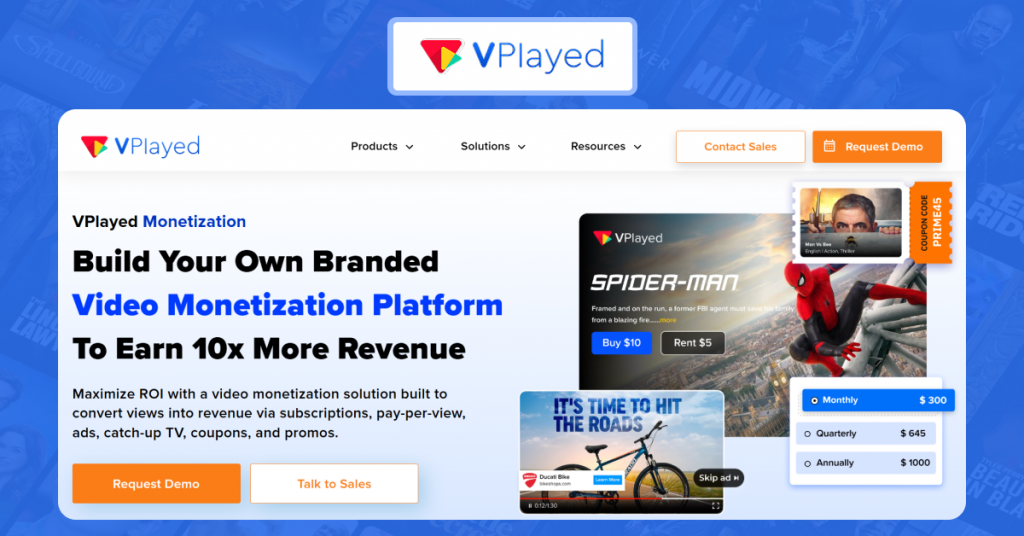
VPlayed is the top video selling platform for enterprises looking for an ownership-based distribution model. It allows media houses to access the entire source code and gives a white-label framework for creating a distinct brand identity without the recurring obligations and restrictions of a SaaS subscription.
It includes an integrated paywall, a built-in video CMS, and support for live and on-demand content. One of the platform’s most notable features is its “zero revenue-sharing” policy, which makes it an ideal option for businesses with high volume who want to maximize their long-term margins.
Key Features:
10+ video monetization models, such as SVOD, TVOD, AVOD, hybrid models, to name a few
Advanced video CMS with bulk uploading, metadata automation, transcoding, and HTML5 player
200+ third-party tools integration support
DRM (Digital Rights Management), AES encryption, dynamic watermarking
Native apps for multi-device support
Flexible hosting supports on-cloud and on-premise, depending on your needs
Real-time analytics for tracking revenue and audience viewing behavior
AI features to increase engagement and reduce manual editing work
Multi-device support across Android, iOS, Web, and Smart TVs
Pros
- Fully customizable platform with source code access
- Zero revenue sharing model
- Lossless migration support
Cons
- Initial setup needs technical assistance
- Pricing is not disclosed to the public
Pricing
VPlayed doesn’t have a fixed subscription model. Contact the sales team for a custom quote based on your needs.
Best For
Enterprises, media houses, and broadcasters that want full source-code access and complete customization without a commission fee.
Expert Tip
The initial cost or initial capital expenditure (CapEx) is steep, but in the long run, the long-term operational expenditure (OpEx) is significantly lower since you are not required to pay recurring fees or share revenue.
2. Brightcove
Brightcove is a content monetization platform that lets you sell videos online through subscriptions, advertising, and transactional video offerings. It is designed for large-scale media companies and businesses rather than individual creators who need global delivery without any downtime.
It goes beyond hosting, providing a sophisticated infrastructure and stringent content protection. It is the top choice for corporate teams and media giants that demand deep integration with existing marketing stacks and broadcast-quality delivery.
Key Features:
Advanced insights into viewer engagement
Multi-device streaming support
Reliable global CDN
Beacon technology to launch apps across multiple devices
Context-aware encoding that reduces storage and bandwidth
Digital Rights Management (DRM) to protect videos from piracy and illegal sharing
Optimized playback with low latency and adaptive bitrate streaming
Pros
- Guarantees 99.9% uptime
- White-label customization
- Extensive third-party integrations
Cons
- The interface can be overwhelming for new users
- Some advanced monetization is available only on higher-tier plans
Pricing
Brightcove’s pricing isn’t publicly disclosed. It is custom-quoted on demand depending on the use, features, and support needs.
Best for
Media companies and corporate teams that need VOD and live streaming with strong DRM and deep integration with their existing marketing stack.
Best VOD Platforms to Consider
Compare the VOD platforms based on scalability, content management, monetization options, and streaming performance.
3. Kaltura
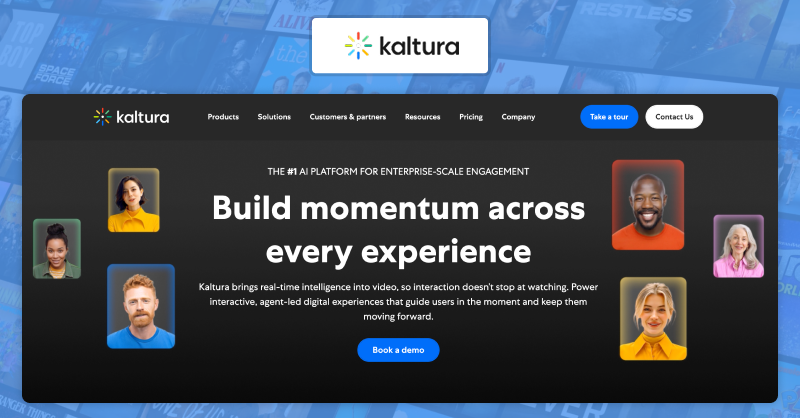
Kaltura is the best platform for selling videos online in the education and corporate training niche. It has open-source access, making it modular, giving universities and teachers the freedom to create extremely interactive virtual classrooms. It helps host interactive online events, town halls, and webinars.
Kaltura comes with an enterprise video management feature for centralized storage and publishing. Its AI-powered content tools combined with robust LMS integration features make simple video watching an engaging, measurable learning experience.
Key Features:
Advanced video monetization that also integrates with ad servers
Interactive video experiences like quizzes, captions, polls
LMS integration with Blackboard, Canvas, D2L, Moodle, and Sakai
Content repurposing with AI to make reels, summaries, and short clips
Kaltura MediaSpace Go app supports mobile recording
Kaltura Capture desktop app for presentation recording
Allows showcasing your content as a brand with custom portals
Pros
- Multi-DRM security and access control to prevent content piracy
- Free trial is offered without a credit card requirement
- Advanced analytics on user engagement and content performance
Cons
- Unintuitive interface
- Initial set-up is time-consuming due to the modular architecture
Pricing
Custom quote depending on uses, features, and support needs
Best for
Educational institutions and online course sellers that need a virtual classroom, deep integration with LMS, and an AI-powered learning experience.
Rethink Kaltura With a Top Alternative!
Sell your video library online via the best Kaltura alternatives offering unlimited customization and diverse revenue models.
4. Enveu
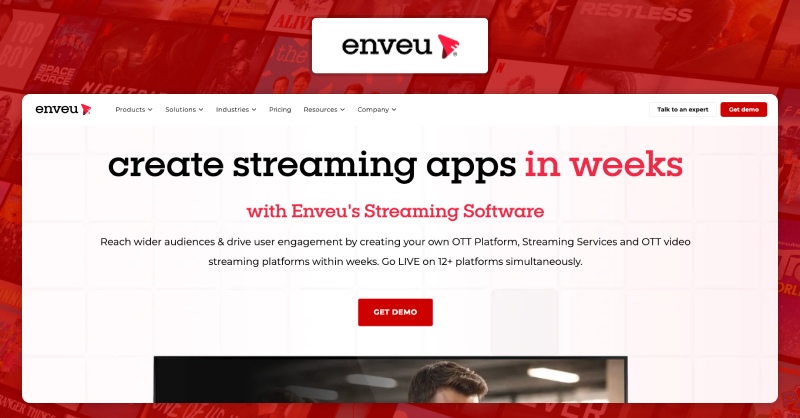
Enveu is the best video selling platform if you want a low-code solution that replicates custom development and saves time. It has been built with speed as a priority, with an Experience Cloud video streaming solution that enables startups and broadcasters to build the OTT apps of their dreams without a large engineering team.
It supports SVOD, TVOD, and AVOD along with content management tools for scheduling and publishing. It is designed to scale from hundreds to millions of viewers without compromising performance.
Key Features:
Multiple monetization models support
50+ third-party integrations
Real-time layout editor to change your app’s interface or rearrange video categories
Advanced DRM watermarking, token-based access, and geo-blocking
Analytics to track engagement rates and audience retention
Centralized dashboard to manage everything in one place
White-label streaming customization across web, mobile, and smart TVs
Multi-device deployment to over 15 platforms
Pros
- Multi-device streaming
- No revenue sharing
- Faster time-to-market
Cons
- Steeper learning curve for non-technical teams
- Solo-creators and small teams might not need the feature depth provided
Pricing
Lite: $549/month
Professional: custom price
Enterprise: custom price
All plans have a demo
Best for
Broadcasters, OTT startups, e-learning organizations that want a low-code platform with multi-device support.


5. Vimeo OTT
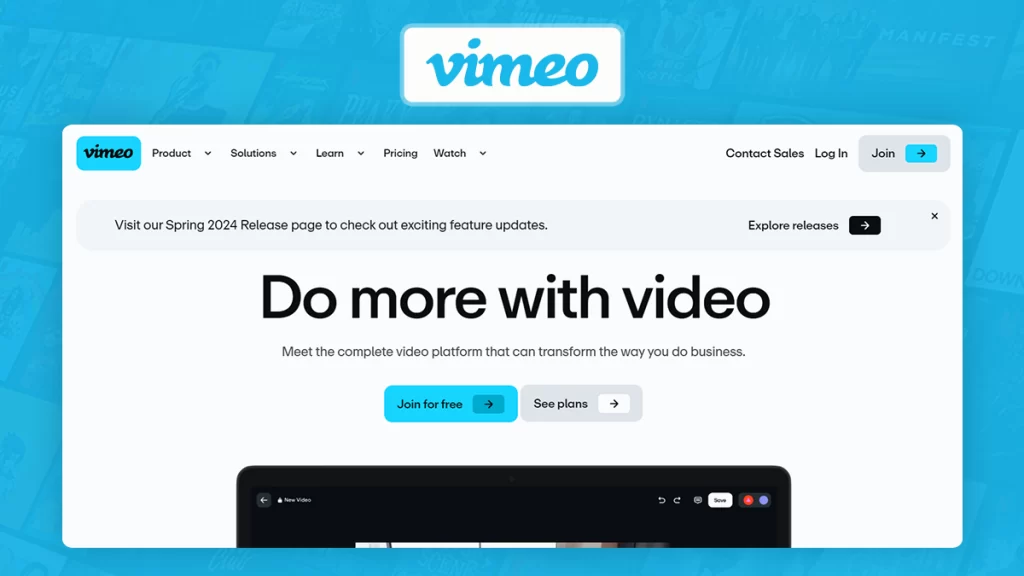
Vimeo OTT is an affordable video selling platform for established creators aiming to move away from social networks to a professional subscription service It eliminates the technological hurdle by providing a “plug-and-play” approach to start branded apps.
It has built-in infrastructure that supports global content delivery networks (CDN), payment processing, and a viewer management dashboard. This is the perfect environment for niche filmmakers and fitness influencers who wish to have a dependable and simple solution for handling recurring income and international payments.
Key Features:
Multiple monetization models support
Content and audience management to organize video libraries and subscriber data
Digital Rights Management (DRM) to protect your intellectual property
Automatic transcoding to deliver content based on the viewer’s device and network conditions
Global payment processing that supports 100+ currencies
Coupons and promotional offers to reduce churn
Multiple monetization models supported with SVOD and TVOD in the starter plan and AVOD in higher tiers
Supports both web and living room reach
Pros
- Buffer-free delivery with global CDN
- 4K and HDR support with low-latency delivery across devices
- Easy set-up compared to custom OTT platforms
Cons
- Best suited for content owners with an established audience rather than beginners
- 24/7 support is available for Enterprise-plan content owners
Pricing
The starter-tier usually costs around $1 per active subscriber/month. Enterprise plans have custom pricing with advanced online video monetization and wider app support.
Best for
Independent creators, educators, and media companies that already have an established audience and want flexible monetization and recurring revenue streams.
Searching for options beyond Vimeo OTT?
Assess this Vimeo OTT alternative platform to sell your videos to a global audience with the best streaming features and solutions.
Tired of using Vimeo OTT?
6. Dacast
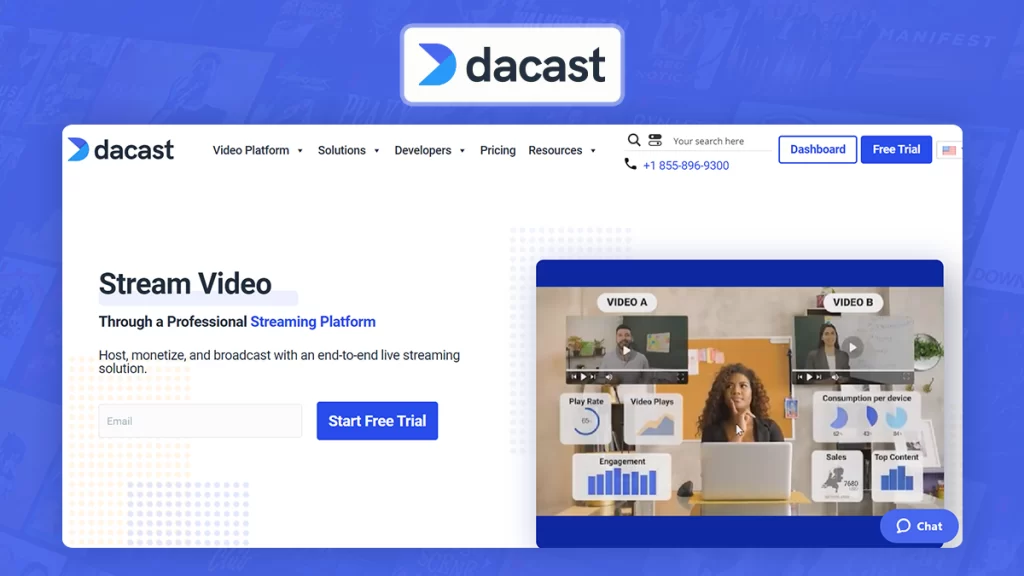
Dacast offers the best way to sell videos online with its focus on high-performance live streaming, with a multi-CDN strategy to provide buffer-free streaming, no matter where the viewers are located. It leverages a “no-commission” model that provides clear monetization opportunities for event organizers and broadcasters of webinars and live sports, and implements a built-in paywall.
It supports pay-per-view, subscriptions, promo codes, and global currencies. It’s a powerful solution for anyone who values low-latency delivery and easy monetization.
Key Features:
Built-in monetization & paywall to handle membership access and video sales
Advanced security with password protection, geographic restrictions, tokenized security, and more
Bandwidth calculator to help you get an estimate of costs based on viewers, duration, and stream quality
Advanced video CMS for bulk uploading, deleting, and editing
Customizable HTML5 video player
Video API access seamless integration with existing applications
Live streaming and VOD support with branded video showcases
Pros
- Low-latency streaming
- Transparent pricing
- No revenue sharing
Cons
- Very expensive for small businesses
- Lack of deep analytics
Pricing
For live streaming:
- Starter Plan: $39 per month
- Event Plan: $63 per month
- Scale Plan: $165 per month
- All Dacast plans have a free trial option.
Best for
Broadcasters, religious institutions, and event organizers that need live streaming and video-on-demand hosting to monetize webinars and premium content.
Reviewing your platform by Dacast?
Explore the most relevant Dacast competitor that will help you reach the right audience through the best OTT platform.
7. Muvi
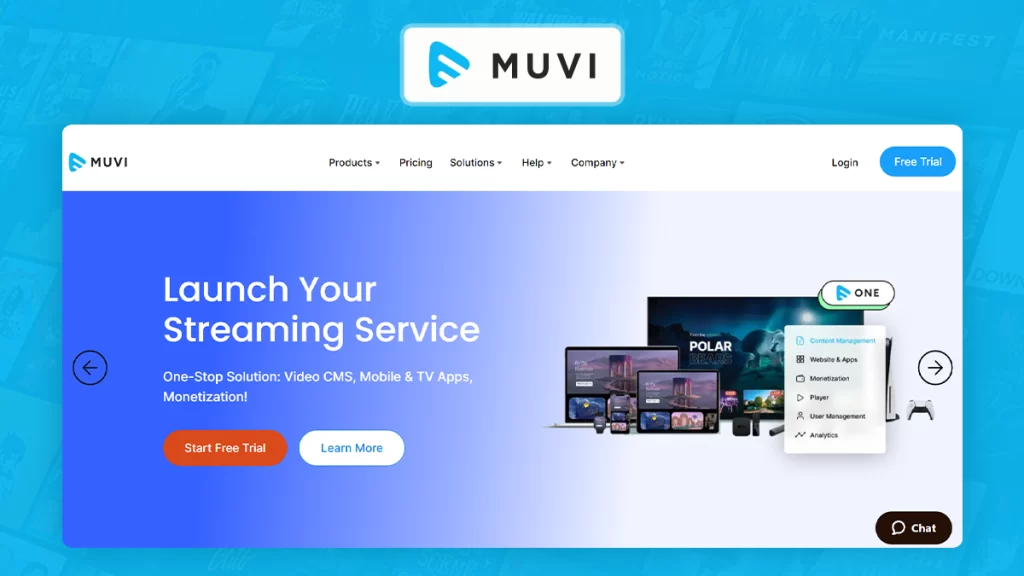
Muvi is a no-code video selling platform that enables creators to launch a “Netflix-style” service in days. It hosts everything from AWS to natively building apps that have a built-in CDN and support 15+ major global payment gateways.
This is why it’s a great option for media companies seeking to establish a direct-to-consumer relationship without dealing with several third-party vendors. It offers multi-screen and white-label delivery with multi-DRM protection and dynamic watermarking.
Key Features:
It offers numerous models of monetization extending beyond the commonly available.
It is recognized as a self-standing platform without the need for additional configuration
The platform provides tools for building video streaming apps and VOD app, enhancing the customer’s overall video streaming services.
It comes with scope of video analytics for performance analysis and optimization at customer’s end.
Muvi TV is a pay-per-view video marketplace designed specifically for monetization without launching a full subscription platform
Unified CMS for managing content libraries and user accounts
Pros
- Easy for non-technical teams to launch with the no-code set-up
- Supports multiple monetization models
- White-label customization across multiple platforms
Cons
- Template-based customization might feel restrictive
- The high starting price can be a barrier for small businesses
Pricing
- Standard at $399/month
- Professional at $1,274/month
- Enterprise at $3,315/month
- Ultimate with custom pricing
Best for
Enterprises and media companies that Netflix-style streaming service with predictable flat pricing.
Muvi vs Other OTT Platforms
Compare Muvi Alternatives with other leading OTT providers to find the right solution for your streaming business needs.
8. Wistia
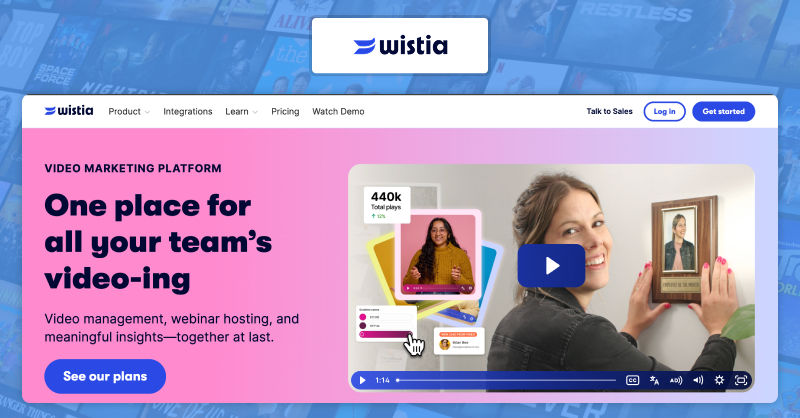
Wistia is a business-focused video selling platform built for marketers with the goal of converting video views into business leads. It focuses on the “conversion funnel,” as it provides tools for capturing leads and heatmaps to illustrate the exact way an audience is interacting with content.
It can be an effective tool for nurturing audiences and data-driven marketing for SaaS businesses and B2B brands. It has lead generation features such as email capture forms and turnstile email collection. It also has built-in analytics and supports marketing integrations for CRM syncing and email marketing workflows.
Key Features:
Turnstile lead capture lets you add an email opt-in form at the beginning, middle, or end of the video
The engagement metrics show detailed insights into which parts of the videos were rewatched, skipped, or dropped off
Integrates seamlessly with HubSpot, Marketo, and Salesforce
Webinars and live video hosting with registration, chat, and replay options
Collaboration tools like project folders and team commenting
Customizable video player to maintain brand identity
Ad-free custom players to keep the focus on your brand
A/B testing to compare different versions of your sales pitch
Pros
- Video SEO that injects metadata into the site to drive traffic
- No ads approach lets you maintain distraction-free viewing experiences
- Free plan available, and other plans come with a free trial
Cons
- Limited monetization features
- Cost can accumulate quickly with media limits and bandwidth
Pricing
- Free plan – $0
- Pro – $79/month, billed annually
- Advanced – $139/month, billed annually
- Premium – Custom quote
Best for
Course creators, educators, SaaS organizations, and brands that want a conversion-focused platform to sell videos rather than a generic video marketplace.
How to Choose the Right Video Selling Platform for Your Business?
The right platform should support your content format, revenue goals, tools for marketing and analytics, and be scalable. The right video selling platform for someone might be completely a mismatch for you. Here is a quick guide on how to choose the right one
Define Your Content and Audience
You obviously know what type of content you are going to sell. If not, make sure you choose the format. Get to know your audience and their expectations before you make any further evaluations about the platform. This will help you filter out platforms that fit your niche.
Evaluate Platform Fees and Revenue Share
There are platforms that charge a recurring fee, and then there are platforms that charge usage-based fees. There are also platforms that only charge a one-time licensing fee. Check whether the platform asks for a revenue share. This will help you choose a platform that aligns with your long-term revenue goals.
Consider Marketing and Audience Growth Tools
All the best video selling platforms available in the market either have a built-in marketing tool or offer integration support, such as email and CRM tools. This helps you reach viewers and also keep track of the viewing behavior and revenue trends.
Check Scalability for Future Growth
The goal is to reach millions of audience, and hence scaling is inevitable. Make sure the platform has global CDNs that support high traffic with adaptive streaming, flexible monetization models, and migration support (when needed). This keeps your video selling business resilient and competitive.
Explore the step-by-step process on cost to start a streaming service that delivers seamless viewing experiences and sustainable revenue growth.
Different Ways to Sell Video Content
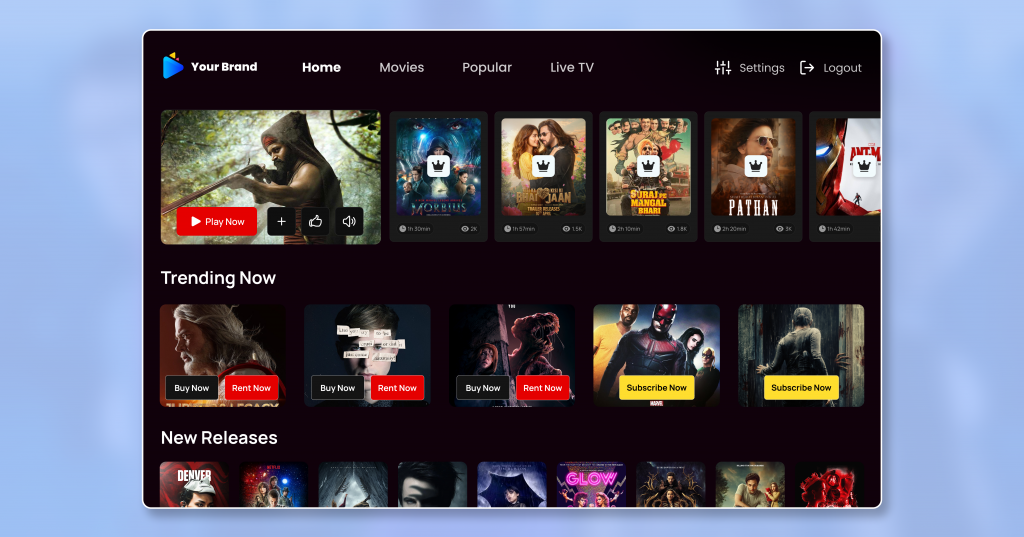
There are several ways to monetize videos online. Subscription models, PPV video access, ad-supported streaming, and hybrid monetization. There are some advanced video selling platforms that offer third-party ad integrations and ads to be stitched directly into the server. Let’s take a detailed look at these monetization models.
1. Subscription-based Video Platforms
Subscription-based video platforms, or SVOD platforms, aim for recurring monthly or annual fees. This is considered a stable way to monetize videos since it brings a predictable fee at a regular interval. If you have an extensive video library, SVOD helps build a loyal community.
2. Pay-per-view Video Sales
The transactional model, or TVOD, allows viewers to buy a specific video or rent it for a particular time. This is a better choice if you offer exclusive live content like sports, concerts, or educational videos. You can set different price ranges for different videos, and it easily generates high revenue even from a small audience group.
How to Create a Pay-Per-View Platform?
Learn how to build a Pay Per View Streaming Platforms that generates revenue from live and on-demand video content through one-time viewer purchases.
3. Ad-Supported Video Monetization
AVOD is the model in which you let the viewers access your video library for free in exchange for watching advertisements. This usually attracts a lot of viewers since they don’t have to pay anything. The only catch is that you need an established audience to get meaningful revenue from ads.
4. Hybrid Monetization Models
As the name suggests, it is a combination of ads, subscriptions, and one-time purchases. Top video-selling platforms include this monetization model to support content owners who need flexibility. This helps attract different audience segments with ease.
5. Server-Side Ad Insertion (SSAI)
SSAI saves your viewers from annoying ads that buffer in the middle of a video. These ads are stitched along with the video stream at the server level and can circumvent ad blockers. If you are serious about selling videos online without losing ad revenue to ad blockers, SSAI is worth trying.
6. Client-Side Ad Insertion (CSAI)
CSAI is the traditional ad method where the ad loads on the viewer’s end. This is easier to set up and is cost-effective, too. If your priority includes tracking real-time engagement data, CSAI best fits you. But the downside is that you could lose your revenue to ad blockers.
7. In-App Purchase
In-app purchases allow viewers to buy a premium video on demand within the mobile app or from the smart TV application. However, Apple and Google take a transaction fee. This makes it easy to sell videos online through a branded app by tapping into the impulse buy behavior of the users. This increases average revenue per user without interrupting their viewing experience.
8. Catch-Up TV
This is made for the viewers who didn’t catch the live-stream. This lets viewers watch what they missed, but at a price. This is a smart way to make more revenue out of already aired videos while getting more ad impressions and highly satisfied viewers.
9. Freemium Model
This model gives the viewers selective videos or episodes for free to attract the audience first. Then the rest of the episodes are offered for a paid tier. This can be in the form of ad-free viewing, exclusive videos, or early access. This is the easiest way to get the audience hooked on to your content and build trust before they pay.
10. Coupons & Promotions
Discount codes and limited-time offers help increase views for seasonal content. They also act as a re-engagement tactic to attract the viewers who haven’t been active in a while. You just have to play the FOMO card with a good deal to turn the inactive viewers into active subscribers.
11. Video Paywall
Consider this a digital gate for your video library. Viewers get a sneak peek of the videos, like a trailer, but they need to pay to access the full content. This works well if you already have an established audience and a strong reputation for delivering premium content.
12. Third-Party Ad Integration
If you don’t want the hassle of managing advertisers directly, then this is for you. Third-party ad integrations connect you to bigger ad networks like Google AdSense or Google Ad Manager. This helps to make money with videos without needing to maintain a dedicated in-house advertising team.
Key Features to Look for in a Video Selling Platform
Choosing the right infrastructure is essential when selecting a platform to sell videos for money. Here are a few must-have features to make the most out of your video selling business.
Multiple Monetization Models
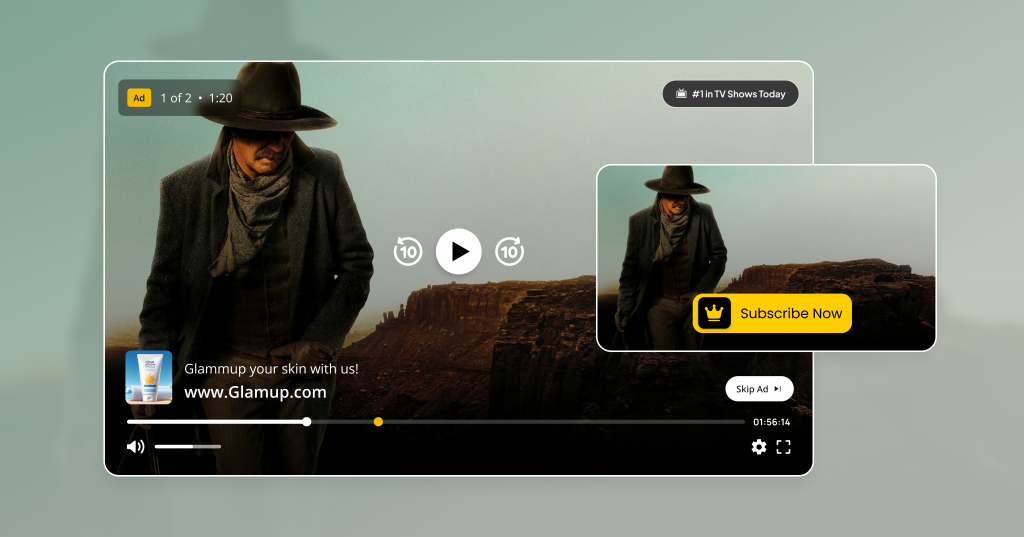
The platform must have multiple monetization models. Make sure you are not choosing single-revenue-model SVOD or AVOD platforms. It should support all primary models, such as SVOD, AVOD, and TVOD, as well as hybrid models that combine two or more of them. It is better if the platform supports ad ingestion techniques like CSAI and SSAI for interactive ads and for bypassing ad blockers.
Zero Revenue Sharing Model
It is better to opt for a platform with zero revenue sharing. Some platforms charge SaaS subscriptions, and others charge usage-based or subscriber fees, which can escalate quickly as your channel grows and can drain your profit. So a platform that doesn’t charge a recurring fee and offers a one-time licensing fee is better to maximize profits.
Flexible Checkout
Your video selling platform must support multiple currencies and handle tax handling to reach global audiences. It should integrate with trusted global payment gateways, offer localized checkout options, and support promo codes or free trials to boost conversions.
Security and Content Protection
The platform that you have chosen to sell videos online has to be equipped with multi-DRM to prevent illegal downloading and piracy. It should support access controls with password protection, domain restrictions, and user authentication. It is best if the platform also provides dynamic watermarking to prevent screen recording.
White Label Customization
white-label platform removes all third-party logos and allows you to customize the user interface using your branding elements. This feature keeps the focus entirely on your own business identity during the viewer experience. It builds brand authority and trust right from the beginning, ensuring your platform looks fully proprietary.
Multi-Device Delivery
Your audience could be using any device. The platform must offer multi-screen compatibility across web, mobile (iOS and Android), and Smart TV apps (Apple TV, Android TV, Fire TV, Roku) with adaptive bitrate streaming.
Analytics and Insights
To improve your monetization profit, you need detailed analytics that show you exact view counts, audience watch time, and drops in engagement. This information helps you make smart decisions about future content.
API Access and Third-party Integrations
Robust API access and integrations enable seamless workflows. Ensure compatibility with CRM tools, email platforms, payment gateways, and analytics systems, along with webhooks to automate actions based on user behavior.
Migration Support with Zero Downtime
Smooth migration ensures business continuity when switching platforms. Look for dedicated support teams, minimal downtime, seamless metadata transfer, and secure migration of subscriber and user data without disrupting the user experience.
Wrapping Up,
Now that we have seen the best platforms to sell videos and different monetization types, the next step is to choose a platform that fits your business model.
The platform you choose determines how much revenue you actually retain, how your audience experiences your videos, and how easily it can scale.
Your priorities might differ. You might need the enterprise-level depth of Kaltura and Brightcove, or the marketing-driven features of Wistia, or the total ownership and zero-revenue sharing of VPlayed. It doesn’t matter if you are an independent creator, a huge media house, or a corporate team; there’s a platform on the list for your needs.
The content is yours. The audience is waiting. Now all that is left is you picking the platform that works hard for your goals.
- Request Demo Book a Live, Personalized Demo
- Contact Sales Reach Out to Our OTT Experts


